Yellow background with large text reading GEN X THE FORGOTTEN GENERATION. A hand holding Canadian money, highlighting gen x retail spending, forms the letter X in GEN X. The shomi! logo appears in the bottom right corner.

Gen x: The Forgotten Generation

Gen X grew up as the original latchkey generation: letting themselves in after school, microwaving something questionable for dinner, and generally being trusted to handle it. Forty years later, retail is still leaving them to fend for themselves. The only difference is now they’re the ones with all the money.

We flagged this at the end of The Customer Is Always Right, But Which One?: Gen X drives an outsized share of retail spending while retailers spend their budgets chasing the generations on either side of them. Here’s the actual scale of what’s being missed.

Who they are, and why nobody studied them

Gen X was born between 1965 and 1980, putting the cohort at 45 to 60 years old right now, squarely in its highest-earning years. According to NielsenIQ’s “The X Factor” report, Gen X is set to lead global consumer spending through 2033, when the group’s collective spend is projected to surpass $20 trillion USD.

That scale exists partly because nobody bothered to compete for it. Retail strategists interviewed by Forbes point to a straightforward explanation: Gen X has always been the smaller cohort, sandwiched between Boomers who built the institutions and Millennials who took over the cultural conversation, which made it easy for marketing budgets to chase the louder neighbours instead. It’s less that Gen X is hard to reach and more that almost nobody tried.

The numbers retailers keep missing

A 2025 study from ICSC and the analytics firm Alexander Babbage, examining five years of transactions across 426 retailers and $5 trillion in total retail spending, found Gen X has the highest revenue per shopper of any generation in nearly every major category: apparel, home furnishings, fitness, restaurants. They’re 19% of the US population and responsible for 31% of all in-store and online retail spending.

Per shopper, the gap is stark. A December 2025 analysis in GlobeSt put Gen X’s average spend at $1,683 per transaction, compared to $1,630 for Millennials and $647 for Gen Z. And that’s current spending, before accounting for the $42 trillion in household wealth Gen X already controls, or the roughly $1.4 trillion a year in inherited assets Forbes projects the generation will receive over the next decade.

They’re on social media. Nobody’s talking to them there.

Here’s the part that should actually sting: 92% of Gen X uses social media daily, according to eMarketer, essentially the same rate as the generations marketers are obsessed with. Only 5% of influencer marketing spend is aimed at them. That’s not a rounding error, that’s ignoring your highest-tipping regular because he didn’t post a story about the appetizer.

The beauty industry is quietly figuring this out ahead of everyone else. CNBC reported in April 2026 that Gen X households now account for 44% of all dollars spent on beauty, according to market research firm Circana, with skincare as the top category, and that the group’s spending power runs nearly 25% above the national average. What they’re buying into isn’t newness or influencer hype. It’s proven results, ingredient transparency, and a client experience that feels less like a TikTok unboxing and more like a department store counter with someone behind it who actually knows the product.

What this means for a physical environment

Gen X isn’t avoiding stores. 77% prefer shopping in physical locations, and 68% use a mobile app while they’re there, comfortable with technology as long as it’s doing something useful instead of putting on a show.

That’s a fairly specific design brief, and it sits at nearly the opposite end of the spectrum from what we said about Millennials and Gen Z: environments built around visual moments worth photographing. Gen X isn’t there to create content. They’re there to get something done well, and it breaks down into a few concrete choices.

Lighting that does a job, not a performance. Motion-triggered lightboxes and pulsing LED accents are built to catch a scrolling teenager’s eye for half a second. On a shopper who’s already decided what aisle they’re in, the same effect reads as gimmicky rather than premium. Steady, well-calibrated lighting that makes the product and the price legible does more selling here than anything animated.

A soundtrack somebody actually picked. We promised a proper look at this back in the Millennial/Gen Z piece, where a quick callout noted Gen X is the generation most likely to be driven out by a bad playlist. The research holds up: a 1966 study in the Journal of Applied Psychology found loud, upbeat music sends shoppers out the door faster, and a 1982 Journal of Marketing study found slower background music produced a 32% increase in sales. If nobody on the floor has deliberately chosen what’s playing, that’s still a choice, just usually the wrong one.

Materials that age the way they’re supposed to. A finish that looks intentionally distressed on day one usually looks accidentally distressed by month three, and this shopper notices the difference immediately, because they’ve owned enough furniture, tools, and vehicles to know what real wear looks like. Powder-coated steel, properly tensioned SEG fabric, and hardware that doesn’t rattle read as quality precisely because none of it needs an explanation.

Wayfinding that doesn’t require a phone. Clear signage, logical product groupings, and fixtures placed where they’re actually needed beat a QR code and an app download every time. Gen X will use the tech if it’s genuinely useful, that’s what the 68% mobile app number is saying, but they won’t tolerate friction dressed up as innovation.

None of that is expensive to get right. It’s mostly a matter of prioritizing legibility and durability over novelty at the spec stage, which is a design decision, not a budget one.

Boomers are still the biggest wildcard in this series, controlling more wealth than anyone and getting talked about the least accurately. That’s probably where this goes next.

A hand holds a small shopping cart against an orange background with bold black and white text: THE CUSTOMER IS ALWAYS RIGHT BUT WHICH ONE? Highlighting how millennials and Gen Z shop differently, the shomi! logo appears in the lower right corner.

The Customer Is Always Right — But Which One?

How Millennials and Gen Z Shop Differently — and What That Means for Your Store Design​

There’s a moment every retailer eventually has, standing in their own store, watching two shoppers side by side and realizing they’re not actually shopping in the same reality.

One is scrolling their phone to compare prices while reaching for a product. The other walked in specifically because they saw your store on TikTok, took a photo near your display before touching anything, and is now reading your brand’s mission statement on the wall like they’re deciding whether to trust you with their firstborn.

Both are under 45. Both have money to spend. And they want almost entirely different things from you.

This is the Millennial/Gen Z split. If your store design isn’t accounting for it, you’re probably leaving one of them cold.

First, a surprising fact that changes the whole conversation

Let’s get the counterintuitive part out of the way early, because it reshapes everything else: Gen Z — the generation that grew up with smartphones surgically attached to their hands — is actually more likely to prefer shopping in physical stores than Millennials are.

According to a 2024 study by global strategy consultancy L.E.K., about two-thirds of Gen Z (64%) prefer shopping in-store to online, and 92% do research before they make a purchase. Meanwhile, Millennials trail at a distant 43% on that same in-store preference measure.

And it’s not a passive preference. Almost three-quarters of Gen Z shop in-person at least once a week, and the majority consider it an experience.

The generation everyone assumed would kill physical retail is, in many ways, keeping it alive. They just need you to hold up your end of the deal.

We covered a lot of Gen Z’s broader consumer psychology in our earlier piece, Gen Z: The Trailblazers of Retail’s Evolution. This article gets more specific about what their in-store behaviour actually demands from your physical environment — and how that compares to the Millennials shopping right beside them.

Who they actually are right now

Before getting into design implications, it helps to anchor these generations in where they actually are in life.

Millennials were born between 1981 and 1996, making them 29 to 44 years old today. They’re established in their careers, giving them greater spending power, and are more likely to be going through major life milestones: getting married, moving into a home, having children. They are, in short, the people buying furniture, appliances, and everything that goes in a nursery.

Gen Z, born 1997 to 2012, are still in college or early careers. They have less disposable income individually, but their spending power is expected to grow to $12 trillion by 2030. They’re not who they’ll be yet. Retailers who write them off today are going to have a rough decade.

The Millennial shopper: experience matters, but don’t waste their time

Millennials are comfortable shoppers. They’ve been buying things online since dial-up was a reasonable option, so they don’t need a physical store to browse. What they do need is a reason to be there.

70% of Millennials report that the quality of the shopping experience influences where they shop. That’s not a small number. It means the majority of this cohort is actively making location decisions based on how good the experience feels — not just what’s in stock.

They’re also prone to impulse buying, with 74% reporting they do so regularly, and nearly as likely to make an impulse purchase on their phone as in-store. The journey from “seeing something” to “buying it” is short, but the environment still has to trigger the impulse in the first place.

For store design, this translates into a need for clear, confidence-inspiring visual environments. Millennials aren’t going to stand and read a product paragraph on a cluttered display. They’ve already read reviews at home. Your job in-store is to confirm that the brand lives up to what they researched — and to make the space feel worth the trip.

The Gen Z shopper: the store is the content

Gen Z’s relationship with physical retail is completely different in motivation, even if the destination is the same.

They’re not there because the experience is pleasant. They’re there because shopping has become social and visual in a way that only a physical space can deliver. Hashtags like #mallhaul and #shopwithme generate millions of views, turning stores into content studios. Your store isn’t just a place to sell things — it’s a backdrop, a set, and a credibility signal.

41% of Gen Z cite the ability to touch and see products as their primary reason for shopping in-store — up significantly from the year before. They want the tactile and the tangible, which no amount of AR try-on technology has fully replaced yet.

But here’s where the paradox gets interesting: Gen Z shoppers are actually more cautious spenders than Millennials, with 47% saying they prefer to wait a few days before making a purchase. They’re in your store, absorbing everything. They may not buy today. They’ll go home, research more, and come back — or they’ll convert someone else through the content they create while standing in your space.

The store has to earn that second visit, and it has to be worth photographing in the meantime.

There’s also a patience threshold retailers should take seriously: 3 in 5 Gen Z shoppers will abandon a purchase if the checkout line is long, and more than a quarter will leave if their preferred payment method isn’t available. They’ll give you a great deal of enthusiasm on the way in and zero tolerance on the way out.

A note on music - from the generation you're probably ignoring

The research on in-store music volume is pretty unambiguous, and it goes back further than you’d think. A 1966 study in the Journal of Applied Psychology found that loud music caused shoppers to exit the store more quickly than soft music — correlated directly with lower sales. A 1982 Journal of Marketing study backed that up, finding that slow background music produced a 32% increase in sales. The mechanism isn’t mysterious: when the music is slower, quieter, and familiar, people tend to stay in the store longer. Music researcher Jasmine Moradi puts it plainly: “The best retail store music is actually music you don’t really remember.”

The generation most at risk of being driven out by a bad playlist? Gen X — born 1965 to 1980, largely ignored by retail marketing, and quietly responsible for 31% of all in-store and online retail spending despite representing only 19% of the population. They have the highest revenue per shopper across nearly every major category. They notice your environment. They respond to it emotionally. And they leave when it’s wrong.

Your playlist is part of your store design. Treat it that way.

Gen X deserves a lot more than a callout box. We’ll be covering them properly in an upcoming piece.

What this means for your physical environment

The two cohorts actually want the same core things: a space that feels intentional, a brand that looks like it means it, and an environment that matches the promise made online. Where they diverge is in what specifically trips the wire.

For Millennials, the environment needs to communicate quality and ease. Clear navigation, strong visual hierarchy, and lighting that makes products look the way they’re supposed to look. They’re not there to be surprised by your brand — they know it already. The store has to confirm the decision they’d already half made.

For Gen Z, the environment needs moments. Not necessarily gimmicks, but visual anchors worth pausing at, worth photographing, worth showing someone. A well-lit display, a bold graphic wall, an illuminated product showcase — these aren’t decorations, they’re content infrastructure. Gen Z’s path to purchase is non-linear: they might discover a product on social media, price compare in-app, and transact in-store. Your store is one node in a longer journey, and it needs to play its part clearly.

Both generations are showing up. Gen Z and Millennials are projected to fuel 60% of retail sales growth by 2030. That’s not a niche demographic consideration — that’s most of where retail growth is coming from.

The stores that’ll win with both cohorts aren’t going to be the ones with the cleverest loyalty apps or the most aggressive social media strategy. They’ll be the ones that understood something fairly simple: when someone walks through your door, the environment itself is doing the selling. The graphics, the lighting, the spatial flow, the way a display makes you feel when you’re standing in front of it.

That’s not a new idea. It’s just one that’s become impossible to ignore.

shomi! builds the displays, frames, and illuminated environments that make retail spaces worth walking into — and worth staying in. If you’re rethinking your store environment, we’re happy to help you figure out what makes sense for your space.

Sources
L.E.K. Consulting (2024) • Adyen/Retail Dive (2025) • Attentive (2024) • Circana (2025) • PwC 2025 Holiday Outlook • Journal of Applied Psychology (1966) • Journal of Marketing (1982) • Soundtrack Your Brand/Jasmine Moradi • ICSC/Alexander Babbage (October 2025) • RetailCustomerExperience.com • Parcel Pending/Quadient (2025)

Five people stand in a row holding icons of social media apps over their faces. Large text reads: Gen Z Redefining the Future of Retail Part 1. Bright orange background and the shomi! logo highlight tips for marketing to Gen Z.

Gen Z : Redefining the Future of Retail, Part 1

Generation Z is the cohort currently in their teens and twenties: people born roughly between 1997 and 2012, depending on which definition you trust. They’re also the first generation in history to have never known a world without smartphones, which has turned out to matter a lot more for retail than most brands initially expected.

Gen Z is now flexing real purchasing power, and they’re spending it differently than the generations that came before. They’re not just changing what brands sell. They’re changing what brands have to be, which is a less convenient development for the brands that had already figured out the previous version.

What makes this generation different

Three things separate Gen Z from the millennials, Gen Xers, and boomers retail has spent decades learning to sell to.

They’re digitally fluent in a way nobody else is

Previous generations watched the internet and social media arrive. Gen Z grew up with them, the way previous generations grew up with television, except more so and with worse posture. They research products before they walk into a store, read reviews while they’re standing in the aisle, and watch unboxing videos as a normal part of the buying decision. The phone isn’t a tool they use to shop. It’s the room the shopping happens in, and the store is one of several places they consult.

They expect brands to mean something

This is the shift older brands struggle with most. Gen Z doesn’t just want products that work and prices that are fair. They want to know what the brand stands for, whether the brand’s actions match what it says, and whether the company is run by people they’d trust if they met them. Brands that engage in performative activism or greenwashing get caught quickly, and the call-outs spread faster than the original campaign ever did.

This isn’t about politics. It’s about consistency. A brand that says it cares about something and then quietly does the opposite is more damaging to itself than a brand that never made the claim in the first place. The safest play is meaning what you say, which is also, as it happens, the cheapest one.

They expect to see themselves represented

Gen Z is the most racially and ethnically diverse generation in North American history, and they expect the brands they support to reflect that. Tokenistic representation gets noticed and dismissed, usually before the campaign has finished rolling out. Genuine inclusivity, built into the product and not just the ad campaign, gets rewarded with loyalty.

The role of social media

Social platforms aren’t where Gen Z hears about brands. They’re where Gen Z forms opinions about brands, with or without the brand’s involvement.

Instagram, TikTok, YouTube, and Snapchat all function as parallel storefronts: spaces where products get discovered, evaluated, and recommended by people who don’t work for the brand selling them. Influencer recommendations and peer reviews carry more weight than traditional advertising for a Gen Z audience. The trade-off for brands: less control over the narrative, more leverage when the narrative goes well, and a learning curve for anyone who built their career on the assumption that brands set the conversation.

Why this matters for retail

It would be easy to read all of this and conclude that physical retail is the loser in a Gen Z world. The opposite is closer to true. Gen Z still shops in person, and they value the in-store experience, but they evaluate it against a much higher bar than previous generations did. A store that doesn’t deliver something a screen can’t (atmosphere, expertise, a brand expression you can stand inside of) struggles to justify the trip, because the alternative is sitting on a couch.

The brands winning with Gen Z aren’t choosing between digital and physical. They’re using physical retail to do what digital can’t: build a memorable, sharable, three-dimensional version of the brand that customers can experience with their whole body, then post about with their phone.

Coming up in Part 2

In Part 2, we’ll look at what “authenticity” actually means in practice, what happens to brands that fake it, and what physical retail environments can do that a marketing deck can’t.

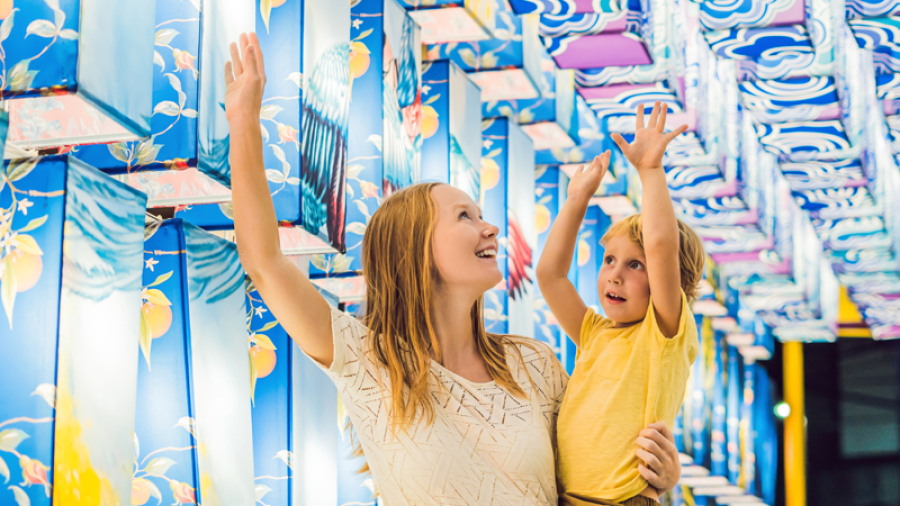
photo of mom holding up child to see colourful displays

What is Retailtainment?

“Retailtainment” is one of those marketing words that sounds invented because it is. But the concept it describes is real and getting more important. It’s what happens when a retail space stops being just a place to buy things and starts being a place worth visiting for its own sake.

The brands doing this well aren’t selling harder. They’re inviting customers into something that’s interesting on its own terms, and letting the buying happen as part of the experience rather than the point of it.

What retailtainment actually is

The short definition: retailtainment is retail designed to be experienced, not just transacted. In-store events, interactive installations, immersive environments, workshops, performances, themed spaces, anything that gives a customer a reason to enter the store that isn’t strictly “I need to buy something today.”

The longer answer is that retailtainment is a response to a problem: ecommerce is faster, cheaper, and more convenient than physical retail for most transactions. Physical stores can’t win on convenience, so they have to win on something else. Experience is the most reliable answer the industry has found.

Four brands doing it well

Arcadia Earth: art, technology, and a point of view

Arcadia Earth is an immersive exhibit that blends art and technology to show the planet’s beauty and the impact of human action on it. Visitors don’t just walk through. They participate, and the experience is designed to leave them thinking about sustainability long after they’ve left the building.

What makes it work as retailtainment isn’t just the spectacle. It’s that the experience has a point of view, and the point of view is connected to the brand. Visitors leave with a feeling, not just photos.

shōmi! helped bring the exhibit to life, and the project remains one of the clearest examples we’ve worked on of what immersive retail can do when it’s designed with intent.

LEGO House: turning the product into the destination

LEGO House in Billund, Denmark is a 12,000-square-metre building dedicated to letting people play with LEGO. Themed zones, interactive installations, opportunities to build at scale, and a level of design ambition that treats the product as a creative medium rather than a toy aisle.

The lesson: when the product is genuinely good, the retailtainment can be an honest celebration of it. LEGO House doesn’t try to convince you LEGO is fun. It gives you several hours to discover that for yourself.

Glossier: the store as the brand

Glossier’s flagship stores are designed to be photographed. Pink-saturated interiors, interactive installations, themed rooms that change between locations. The retail experience is a piece of the brand identity, not a service layer underneath it.

This is also where retailtainment shades into social media strategy. A Glossier store is a place customers want to post from, which means every visit produces content the brand didn’t have to make. The marketing budget effectively rebates itself.

REI: the brand lifestyle, not just the brand product

REI’s outdoor experiences include guided hikes, outdoor skills classes, and workshops. The retailtainment isn’t inside the store. It’s the broader idea that REI is the entry point to an outdoor lifestyle, not just a place that sells outdoor gear.

The lesson: retailtainment doesn’t always have to happen inside four walls. Sometimes the experience is what surrounds the product, and the store is one stop in a larger ecosystem the brand offers.

What these examples have in common

Four very different brands, four different formats, but a few principles repeat:

  • The experience has a point of view. It’s not entertainment for its own sake. It’s entertainment connected to what the brand actually believes or stands for.
  • The customer is a participant, not an audience. Passive viewing doesn’t stick. Interaction does.
  • The experience generates content. Customers post about it, talk about it, send friends to it. The brand gets reach it didn’t pay for.
  • The experience earns the visit. A customer doesn’t have to buy anything to leave satisfied, which makes them more likely to come back, and more likely to buy when they do.

Getting started

Retailtainment doesn’t require a $20 million immersive exhibit. A small pop-up, a thoughtfully designed in-store event, a workshop series, an interactive display that does something more than show product photos: all of these are entry points. The question is less “how much can we spend?” and more “what would actually be worth visiting?”

At shōmi!, we work with brands and agencies on immersive retail builds of every scale, from large permanent installations like Arcadia Earth down to single-event pop-ups. If you’re thinking about how to turn a retail space into a place worth visiting, we’re happy to talk through what that could look like.