Exhibit entrance at Arcadia Earth in Toronto featuring underwater themed decor and text overlay: Behind the Build—an immersive retail installation Toronto.

Engineering the Immersive Coral Reef Experience | Arcadia Earth Toronto

Turning 17,000 square feet of raw retail space into a fully immersive underwater world in less than 16 weeks.

No pressure, right?

That was the brief for Arcadia Earth – The Well Toronto. The goal was ambitious: create a walk-through coral reef experience that completely surrounds guests in 360 degrees of ocean-inspired visuals across floors, walls, and ceilings. It had to feel transportive, educational, and unforgettable.

And it had to actually work in the real world. Here’s how we made it happen.

The Challenge: Big Vision, Tight Constraints

Arcadia Earth secured a raw 17,000 sq ft retail unit at The Well in downtown Toronto. The vision was clear. Guests would step inside and feel like they were walking through a living coral reef.

The reality was a little more complicated.

  • Oversized 3D coral structures had to fit through a relatively small front entrance.
  • Large-scale lightboxes and printed fabrics needed to integrate seamlessly with projection mapping.
  • Lighting had to enhance the underwater vibe without washing out projected content.
  • Everything had to come together quickly.

This wasn’t just about building something impressive. It was about making something immersive technically feasible.

The Strategy: Modularity First, Ego Never

To bring Arcadia Earth’s creative vision to life, we leaned into three things:

1. Modularity
2. Precision lighting control
3. Fabrication expertise

Every large-scale element, including 3D wood coral installations, SEG lightboxes, and printed stretch fabric visuals, was engineered in transportable sections. Everything was staged at shomi!, broken down into manageable components, and reassembled on-site.

Big impact. Small access point. No problem.

The goal wasn’t to overpower the space with brightness or compete with projection mapping. It was to collaborate closely with Arcadia Earth’s creative team and build a physical environment that enhanced their storytelling.

Execution Details

Timeline:
Less than 16 weeks from concept to completed installation.

Footprint:
17,000 sq ft raw retail space at The Well, downtown Toronto.

Scope:
A full-space transformation into an underwater walk-through experience featuring:

  • Modular 3D coral reef elements
  • Large-scale SEG lightboxes
  • Printed fabric environments
  • Integrated projection mapping


Key Design and Engineering Elements

Modular Coral Reef Installations

The 3D wood coral structures were fabricated and staged at our facility, then broken down for transport through limited access points. Once inside, they were reassembled into a cohesive reef environment built for durability and longevity.

This wasn’t just scenic. It was engineered for real-world use.

SEG Lightboxes and Printed Fabric

Floor-to-ceiling SEG lightboxes wrapped in printed stretch fabric created immersive visual surfaces throughout the space.

Every printed fabric panel was modular. That means easier installation, cleaner removals, and the ability to reuse core elements in the future. Immersive doesn’t have to mean disposable.

Realistic Underwater Lighting

Lighting was critical. Too bright, and the projections lose impact. Too dim, and the space feels flat.

We designed custom dimmable LED systems to mimic real underwater conditions:

  • More light concentrated at the top
  • Gradual dimming toward the bottom to simulate ocean depth

All lighting levels were adjustable, allowing the team to fine-tune the atmosphere as the environment evolved.

It may sound like a subtle detail, but it makes a massive difference.

Projection Mapping Integration

Projection mapping was central to the experience. So everything we built had to respect that.

Fabrics were printed and installed with precision light control in mind. LED brightness levels were carefully calibrated so projected content remained a focal point, never washed out by ambient light.

The result was balanced visibility across both mediums. Physical and digital elements worked together instead of fighting for attention.

That’s where immersive environments either succeed or quietly fall apart.

The Outcome: Fully Immersive, Fully Executable

The final result:

  • A complete transformation of a 17,000 sq ft retail shell into a fully immersive ocean environment
  • Large-scale assets built modularly for seamless installation despite tight access constraints
  • Clean integration between projection mapping and fabric visuals
  • Custom lighting that delivered a hyper-realistic underwater atmosphere
  • Core elements designed with reuse in mind, supporting long-term sustainability goals

Most importantly, the space reinforced Arcadia Earth’s mission of combining immersive storytelling with environmental education.

What This Project Taught Us

Immersive environments aren’t just creative exercises. They’re production challenges.

You can design the most beautiful experience in the world, but if it doesn’t fit through the door, integrate with lighting, assemble cleanly, or install on schedule, it stays a render.

Projects like Arcadia Earth work because creativity and execution move together. Modularity is planned from day one. Lighting is engineered, not guessed. Fabric, projection, structure, and access constraints are all solved before install week.

That’s the difference between something that looks impressive in theory and something that performs in the real world.

This project was delivered through our custom builds division, shomi! Custom, where large-scale retail and experiential environments are engineered for clarity, feasibility, and repeatable execution.

If you’re planning an immersive environment, make sure it’s engineered to work, not just designed to impress.

Explore Custom Builds →

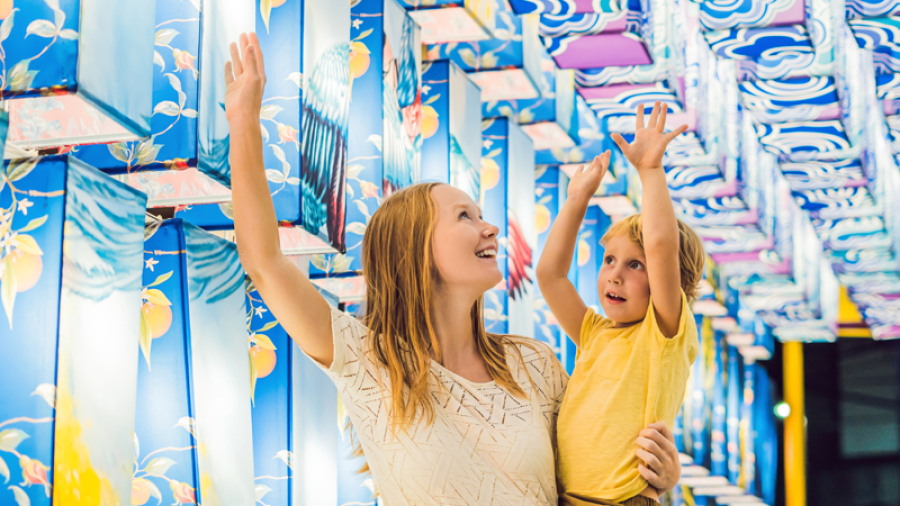
photo of mom holding up child to see colourful displays

What is Retailtainment?

“Retailtainment” is one of those marketing words that sounds invented because it is. But the concept it describes is real and getting more important. It’s what happens when a retail space stops being just a place to buy things and starts being a place worth visiting for its own sake.

The brands doing this well aren’t selling harder. They’re inviting customers into something that’s interesting on its own terms, and letting the buying happen as part of the experience rather than the point of it.

What retailtainment actually is

The short definition: retailtainment is retail designed to be experienced, not just transacted. In-store events, interactive installations, immersive environments, workshops, performances, themed spaces, anything that gives a customer a reason to enter the store that isn’t strictly “I need to buy something today.”

The longer answer is that retailtainment is a response to a problem: ecommerce is faster, cheaper, and more convenient than physical retail for most transactions. Physical stores can’t win on convenience, so they have to win on something else. Experience is the most reliable answer the industry has found.

Four brands doing it well

Arcadia Earth: art, technology, and a point of view

Arcadia Earth is an immersive exhibit that blends art and technology to show the planet’s beauty and the impact of human action on it. Visitors don’t just walk through. They participate, and the experience is designed to leave them thinking about sustainability long after they’ve left the building.

What makes it work as retailtainment isn’t just the spectacle. It’s that the experience has a point of view, and the point of view is connected to the brand. Visitors leave with a feeling, not just photos.

shōmi! helped bring the exhibit to life, and the project remains one of the clearest examples we’ve worked on of what immersive retail can do when it’s designed with intent.

LEGO House: turning the product into the destination

LEGO House in Billund, Denmark is a 12,000-square-metre building dedicated to letting people play with LEGO. Themed zones, interactive installations, opportunities to build at scale, and a level of design ambition that treats the product as a creative medium rather than a toy aisle.

The lesson: when the product is genuinely good, the retailtainment can be an honest celebration of it. LEGO House doesn’t try to convince you LEGO is fun. It gives you several hours to discover that for yourself.

Glossier: the store as the brand

Glossier’s flagship stores are designed to be photographed. Pink-saturated interiors, interactive installations, themed rooms that change between locations. The retail experience is a piece of the brand identity, not a service layer underneath it.

This is also where retailtainment shades into social media strategy. A Glossier store is a place customers want to post from, which means every visit produces content the brand didn’t have to make. The marketing budget effectively rebates itself.

REI: the brand lifestyle, not just the brand product

REI’s outdoor experiences include guided hikes, outdoor skills classes, and workshops. The retailtainment isn’t inside the store. It’s the broader idea that REI is the entry point to an outdoor lifestyle, not just a place that sells outdoor gear.

The lesson: retailtainment doesn’t always have to happen inside four walls. Sometimes the experience is what surrounds the product, and the store is one stop in a larger ecosystem the brand offers.

What these examples have in common

Four very different brands, four different formats, but a few principles repeat:

  • The experience has a point of view. It’s not entertainment for its own sake. It’s entertainment connected to what the brand actually believes or stands for.
  • The customer is a participant, not an audience. Passive viewing doesn’t stick. Interaction does.
  • The experience generates content. Customers post about it, talk about it, send friends to it. The brand gets reach it didn’t pay for.
  • The experience earns the visit. A customer doesn’t have to buy anything to leave satisfied, which makes them more likely to come back, and more likely to buy when they do.

Getting started

Retailtainment doesn’t require a $20 million immersive exhibit. A small pop-up, a thoughtfully designed in-store event, a workshop series, an interactive display that does something more than show product photos: all of these are entry points. The question is less “how much can we spend?” and more “what would actually be worth visiting?”

At shōmi!, we work with brands and agencies on immersive retail builds of every scale, from large permanent installations like Arcadia Earth down to single-event pop-ups. If you’re thinking about how to turn a retail space into a place worth visiting, we’re happy to talk through what that could look like.