Old Phones, New Guts: How Four Vintage Telephones Stole the Show at the NARS Booth
Most trade show briefs sound simple until you start building them.
“Can you make old telephones interactive?” is one of those briefs. It sounds straightforward. Then you’re staring at a handset with no wiring inside it, no audio circuit, no way to know if lifting the receiver will do anything at all. That’s where the real work starts.
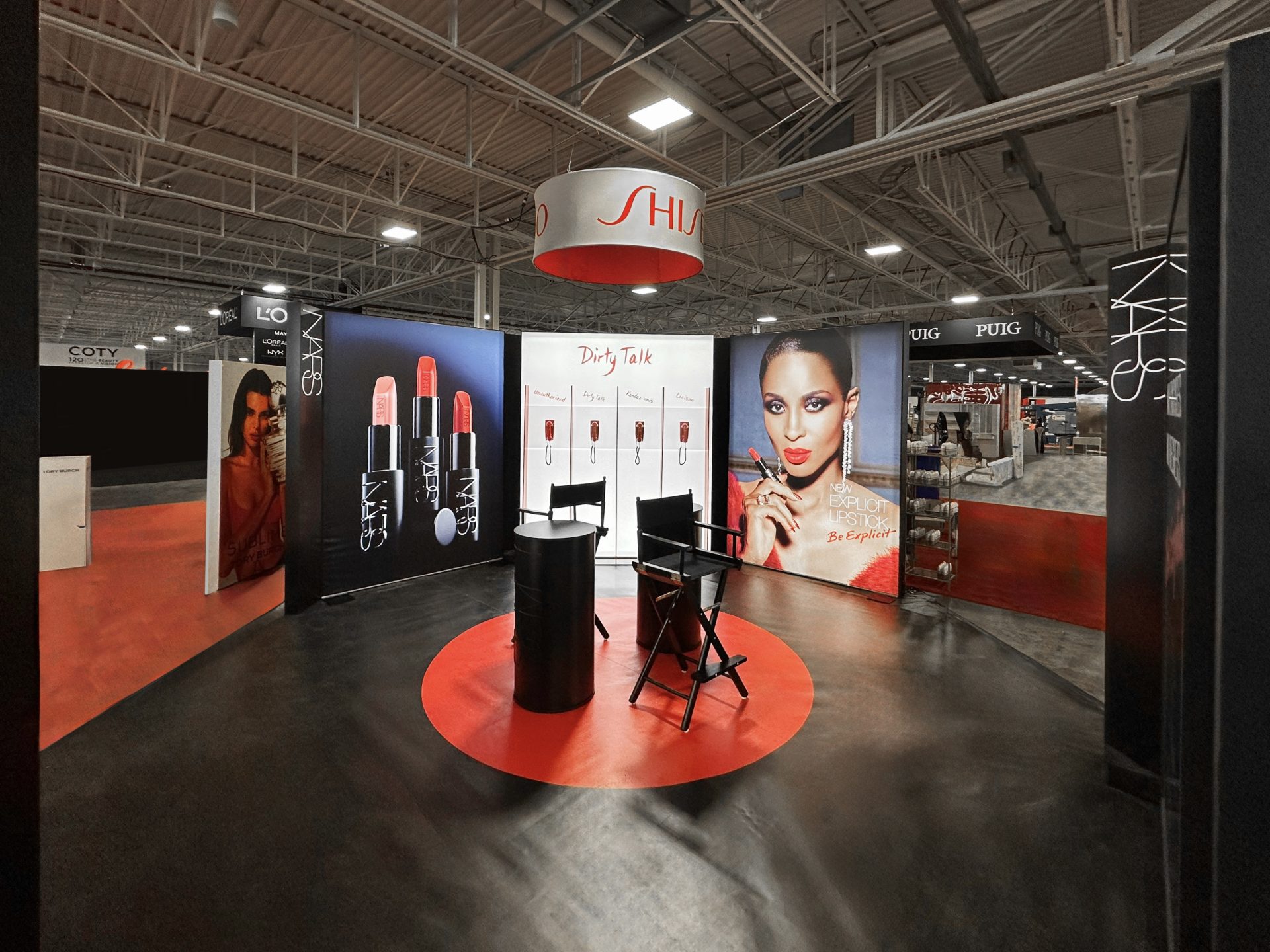
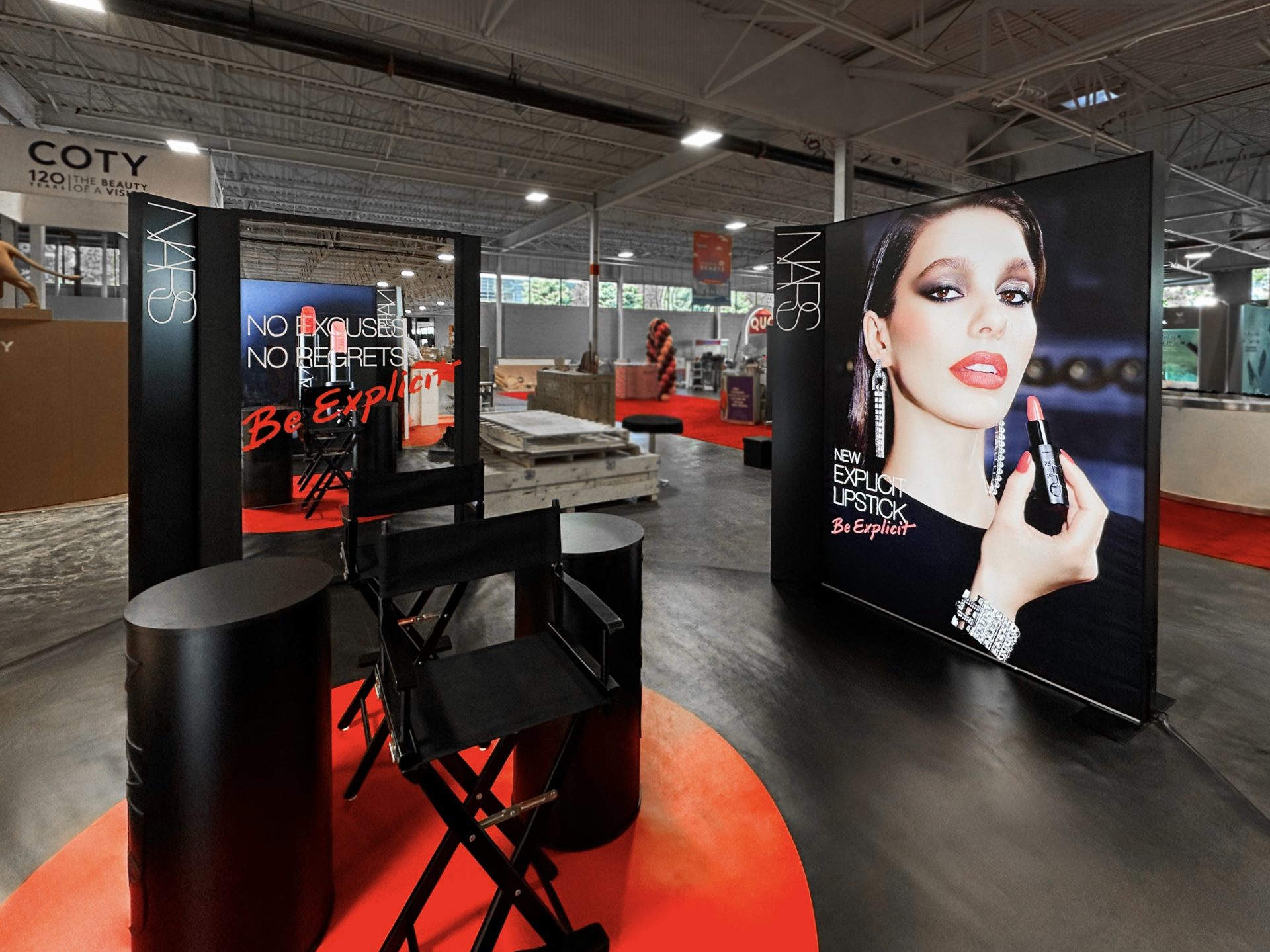
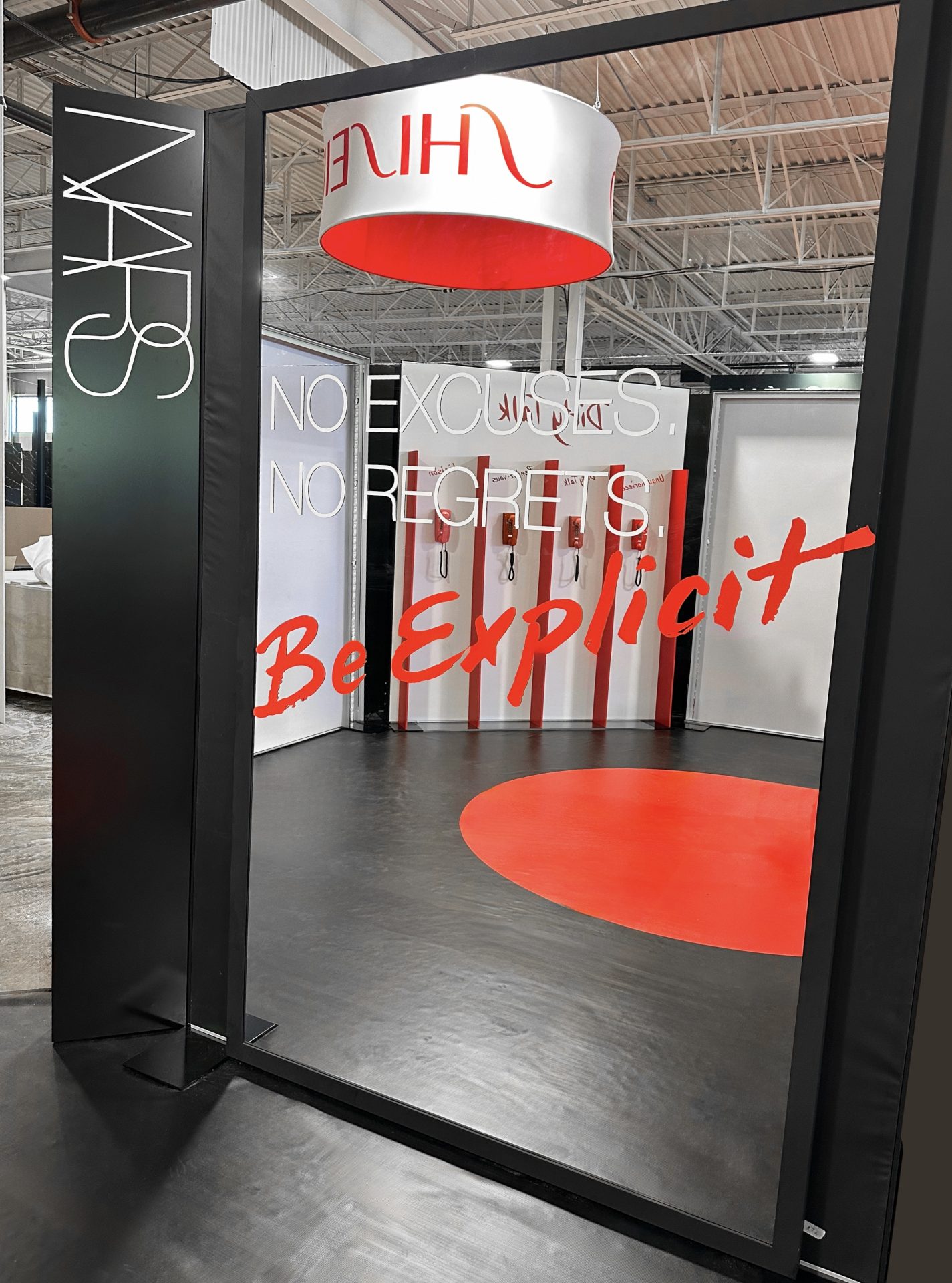
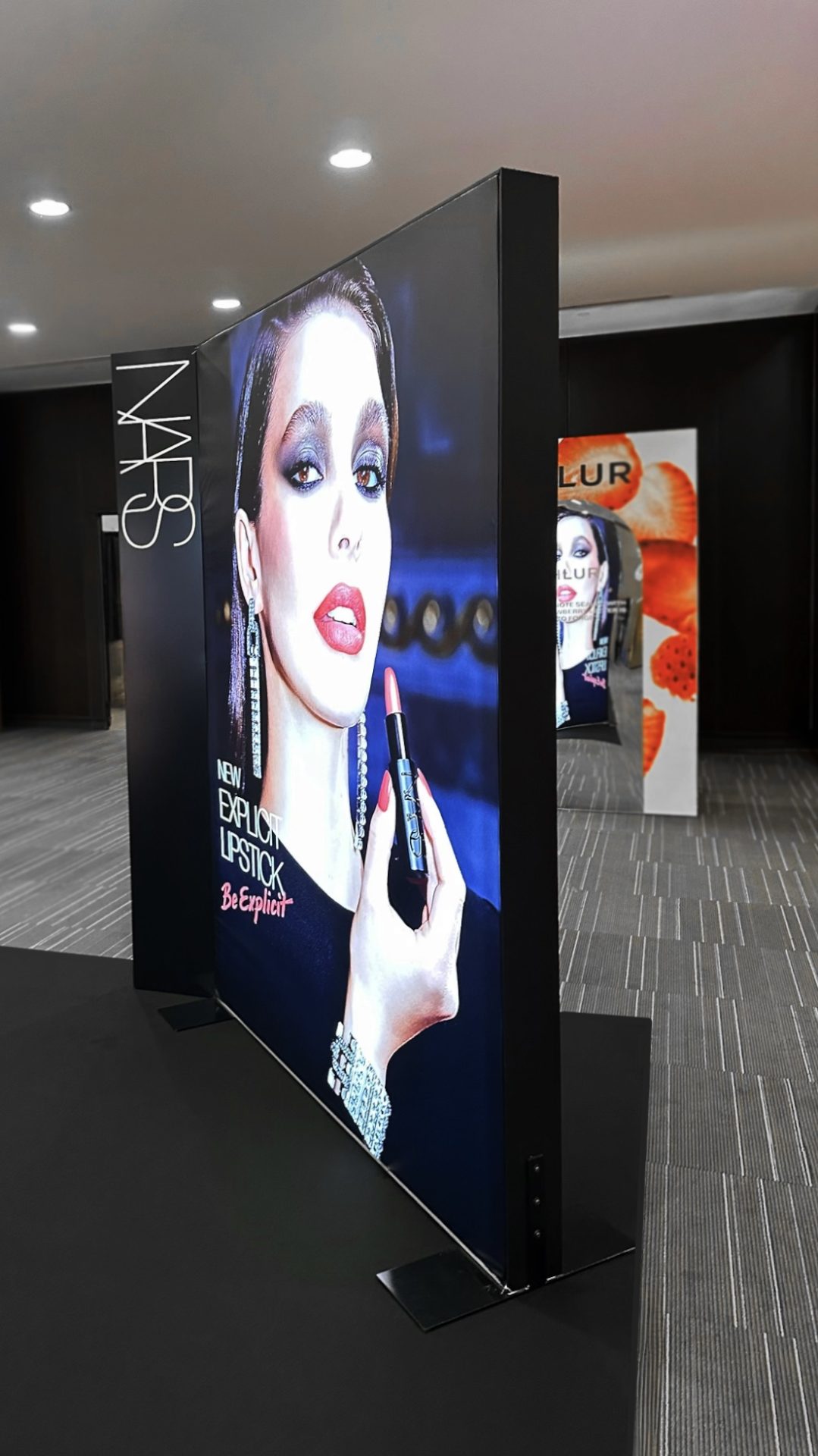
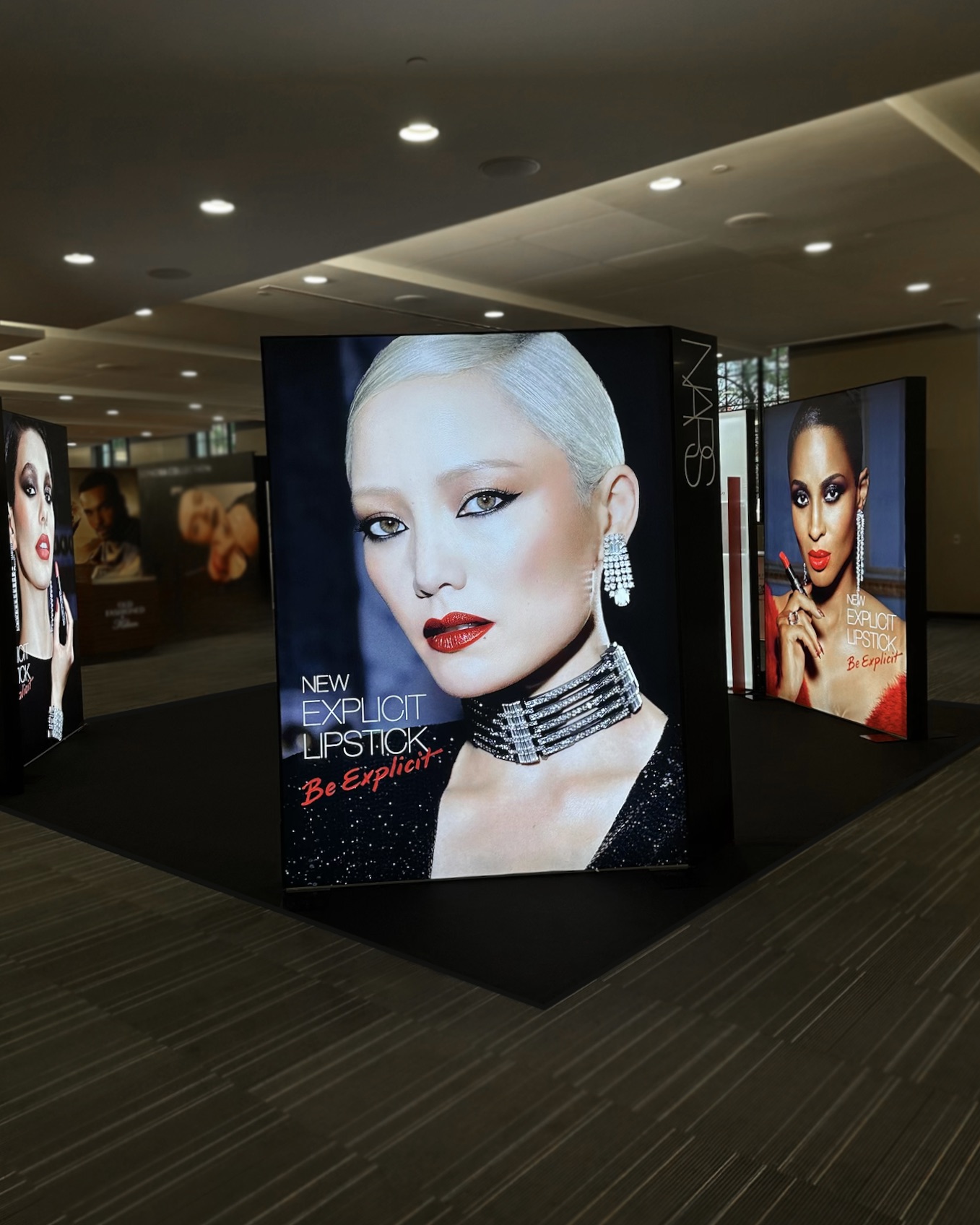
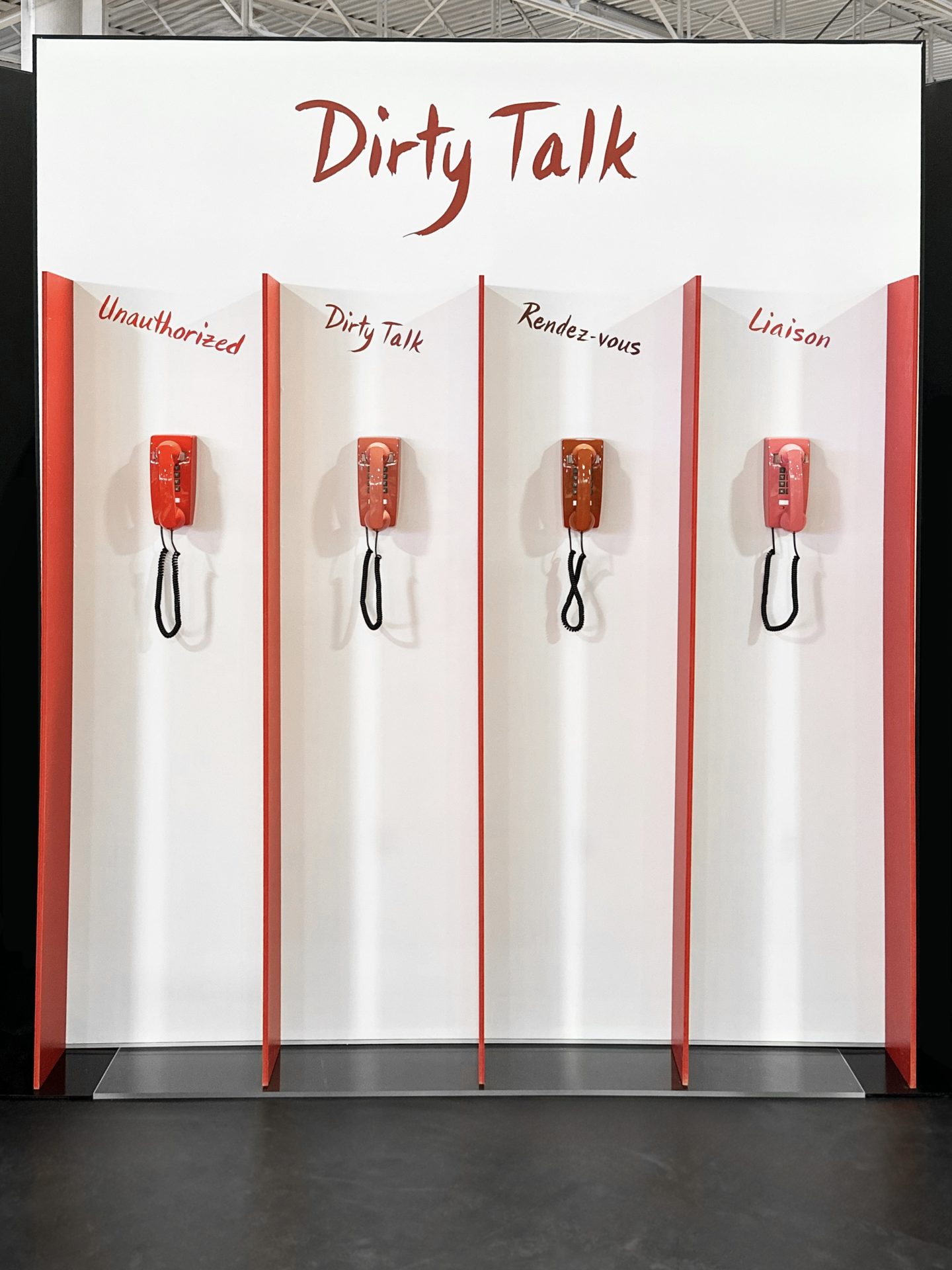
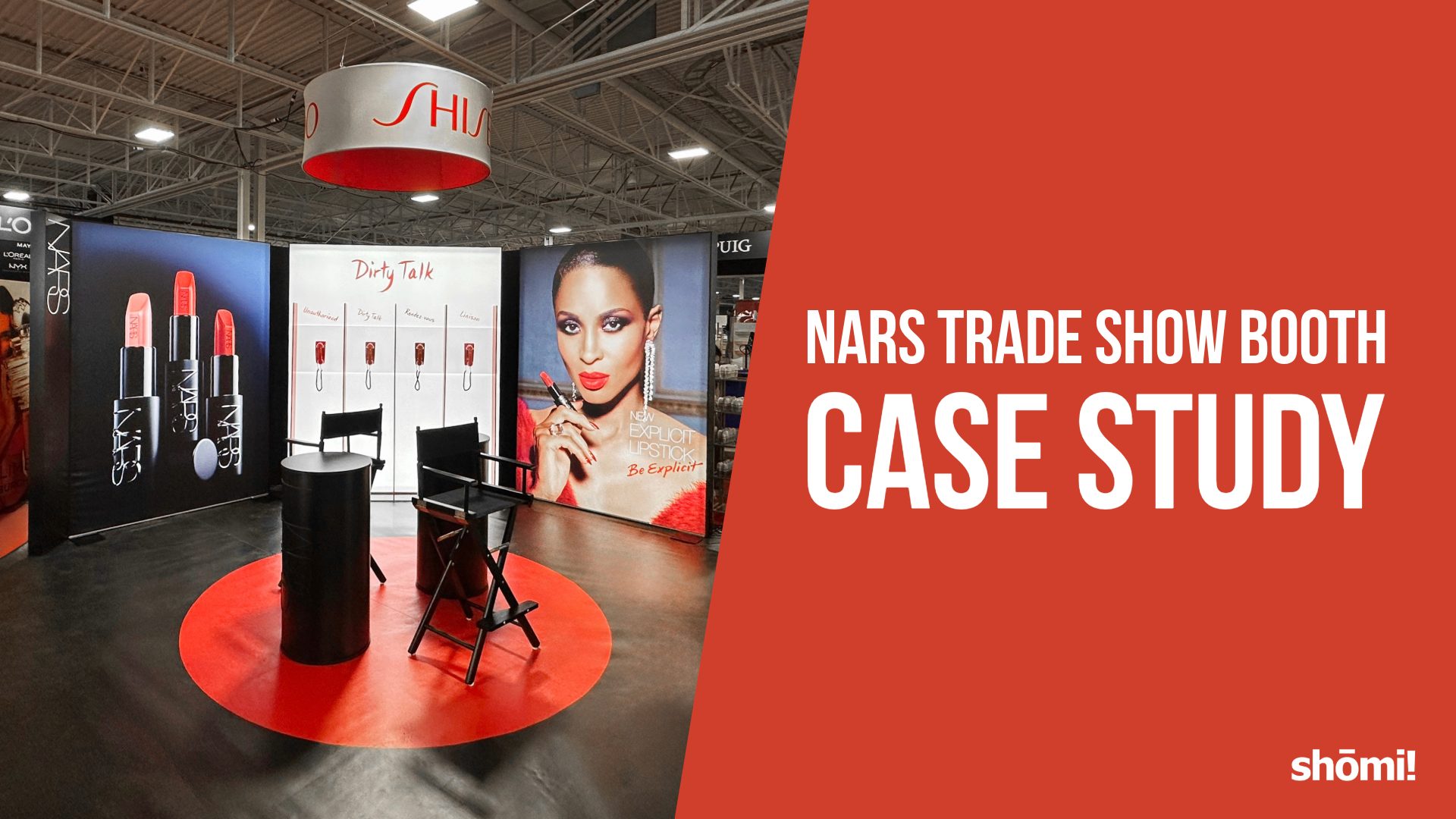
For a 20-foot by 20-foot booth for NARS (designed by Park Creative Studio), we rebuilt four vintage telephone handsets from the inside out. Each one had to play audio on cue, match a specific Pantone colour without chipping, and survive being picked up and hung up – repeatedly – across multiple trade shows. Then we built the whole structure on a modular octagon frame with backlit graphic walls.
Oh, and we had to do it on a budget that could cover custom electronics or a carpet. Not both.
The phone problem
Vintage handsets aren’t wired for interactive marketing. They were designed to hang on a wall and ring. That’s it.
But here’s what they had to do: each phone needed to play a different custom audio clip when someone picked it up, and stop playing when they hung it back down. Four phones. Four different clips. Four triggers.
That meant designing custom electronics that could live inside a vintage handset. We built a circuit around something that was already there: the hang-up clip. That little lever the receiver rests on? That’s a mechanical switch. When the handset sits in the cradle, the clip is compressed. Lift the phone, it releases. That release triggers our custom circuit to start playing the audio for that phone. Hang it up, the clip resets, the circuit cuts out.
We didn’t retrofit a new mechanism into the phone. We built custom electronics that leverage what was already built in.
Each phone also had to match a Pantone colour and look perfect after months of being manhandled at trade shows. Standard spray paint fails that test in weeks. We partnered with an automotive paint shop to get the Pantone match and durability in a single coat – the kind of finish engineered for car doors, not props.
A vintage telephone finished like a bumper. Not a sentence anyone expects to write, but here we are.
The structure
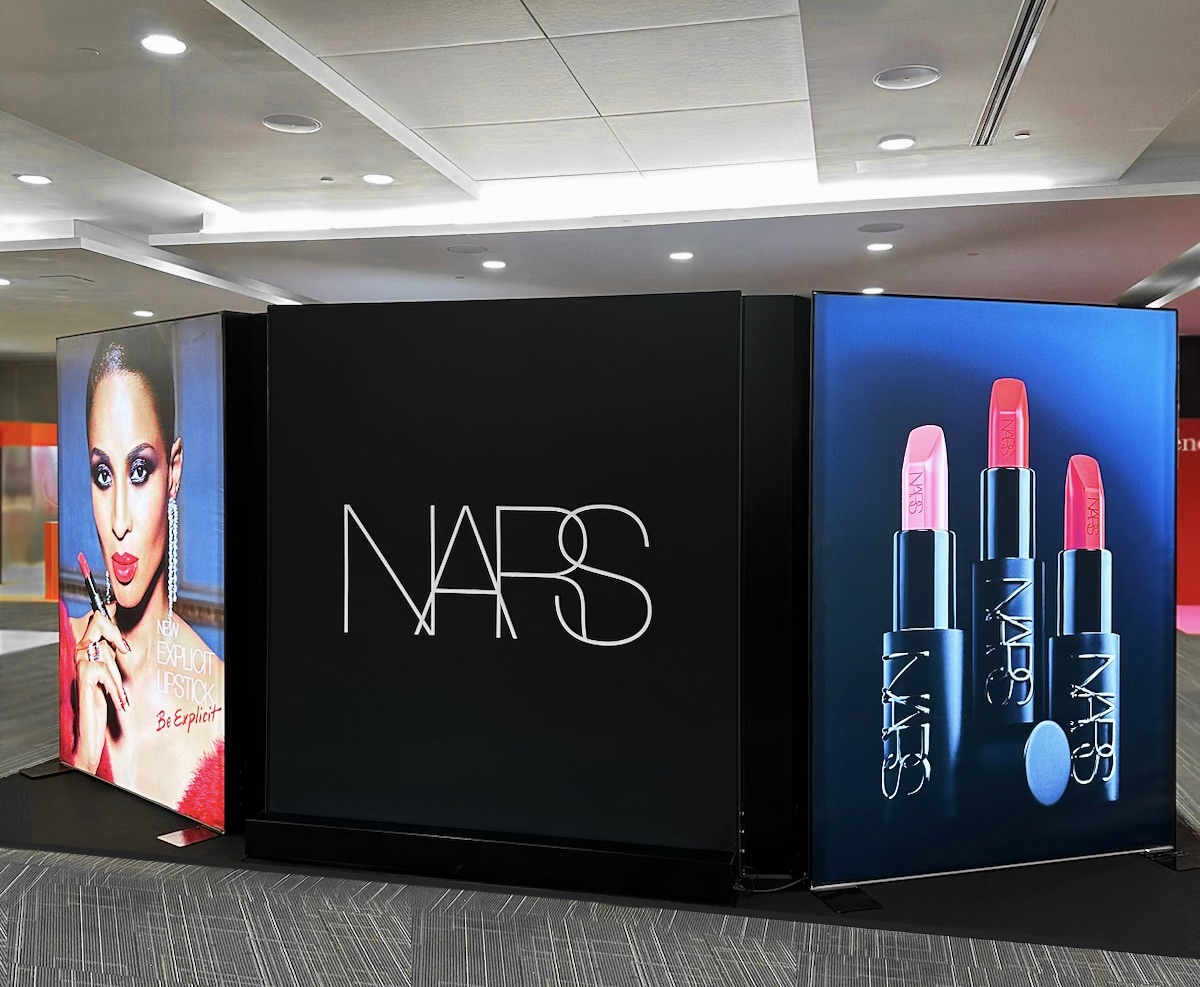
The booth ran on a modular octagon system – eight pieces that come together fast and break down faster, without looking like that was the whole idea. Four of those pieces carried graphic walls printed on fabric and mounted in SEG frames, edge-lit from inside with LEDs. The setup was built to travel and transform without announcing it.
The budget call
Partway through, the math got real. The budget wouldn’t stretch to both the custom phones and a carpeted floor. Every trade show project hits this moment: you choose what people will remember, or what’s under their feet.
The phones were the whole concept. So the floor became a printed vinyl banner – high-quality graphics standing in for carpet at a fraction of the cost. Nobody at the show missed the carpet. Almost everybody picked up the phones.
Why this matters
Interactive elements are the thing every brief asks for and the first thing most builders scope out when money gets tight. The assumption is that interesting problems require expensive solutions.
They don’t, if you’re willing to look before the quote gets locked in.
A switch that already exists inside a phone. A paint finish borrowed from automotive. A floor graphic doing carpet’s job. Those aren’t compromises. They’re solutions that cost less because someone thought about the actual problem instead of the obvious answer.
If your next booth brief has an idea that nobody’s worked out how to build yet, that’s a conversation worth having early. The interesting part isn’t proving it’s possible. It’s figuring out how to make it work without starting from scratch.