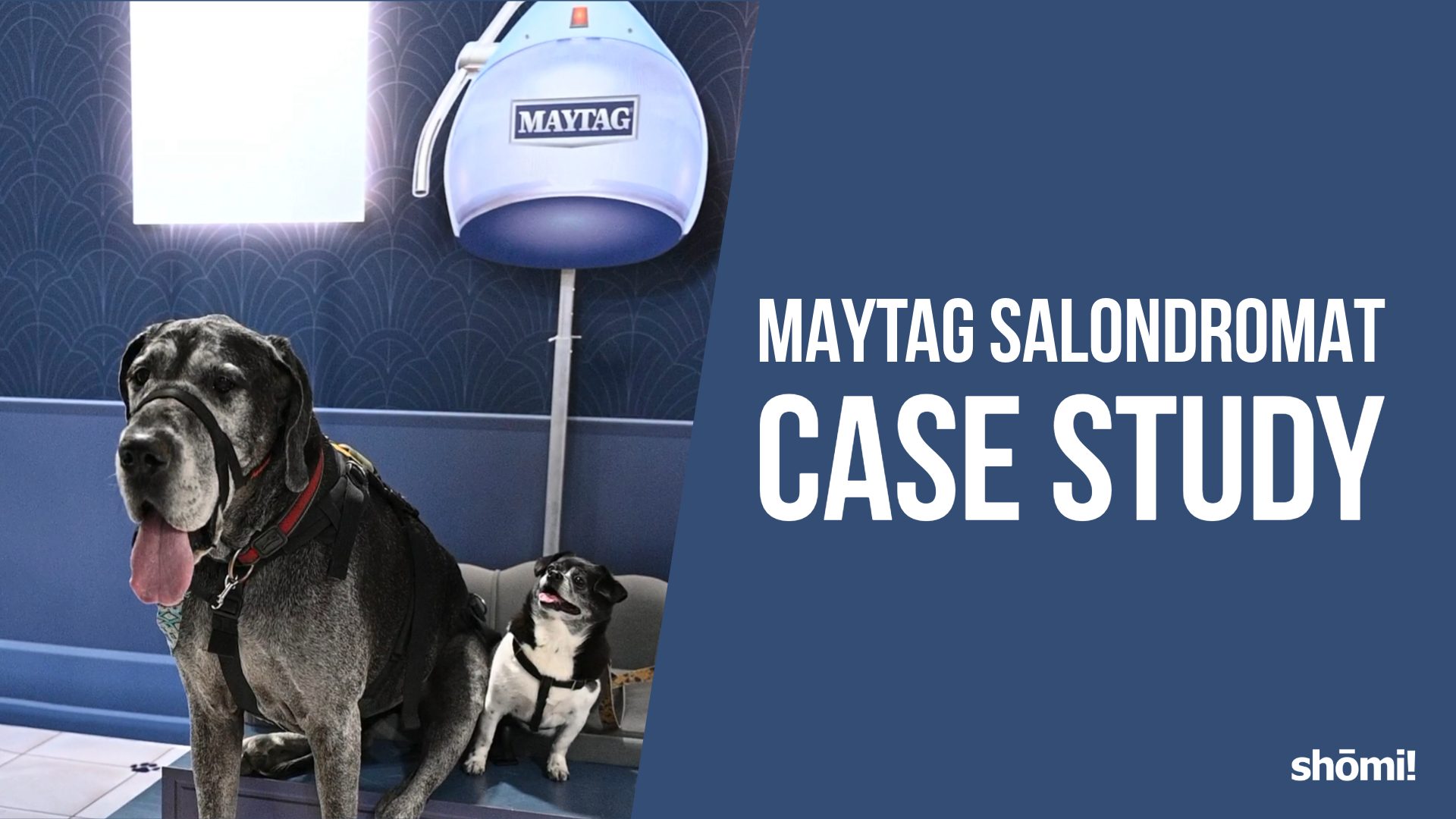
How do you build one photo op that works for a chihuahua and a great dane?
Project at a glance
Client: Maytag
Agency: prspktvMEDIA
Event: Canadian Pet Expo
Footprint: 10′ x 20′ trade show booth
Objective: Launch a pet-focused washer and dryer, engineered to remove five times more pet hair than other models, in a playful, premium environment built around that claim
When Maytag launched a pet-focused washer and dryer at the Canadian Pet Expo, the booth had to land as a high-end pet salon, ship clean to a second city, and stay inside a real-world trade show budget. Here’s how shōmi! built it.
The brief: a luxury pet salon that ships flat
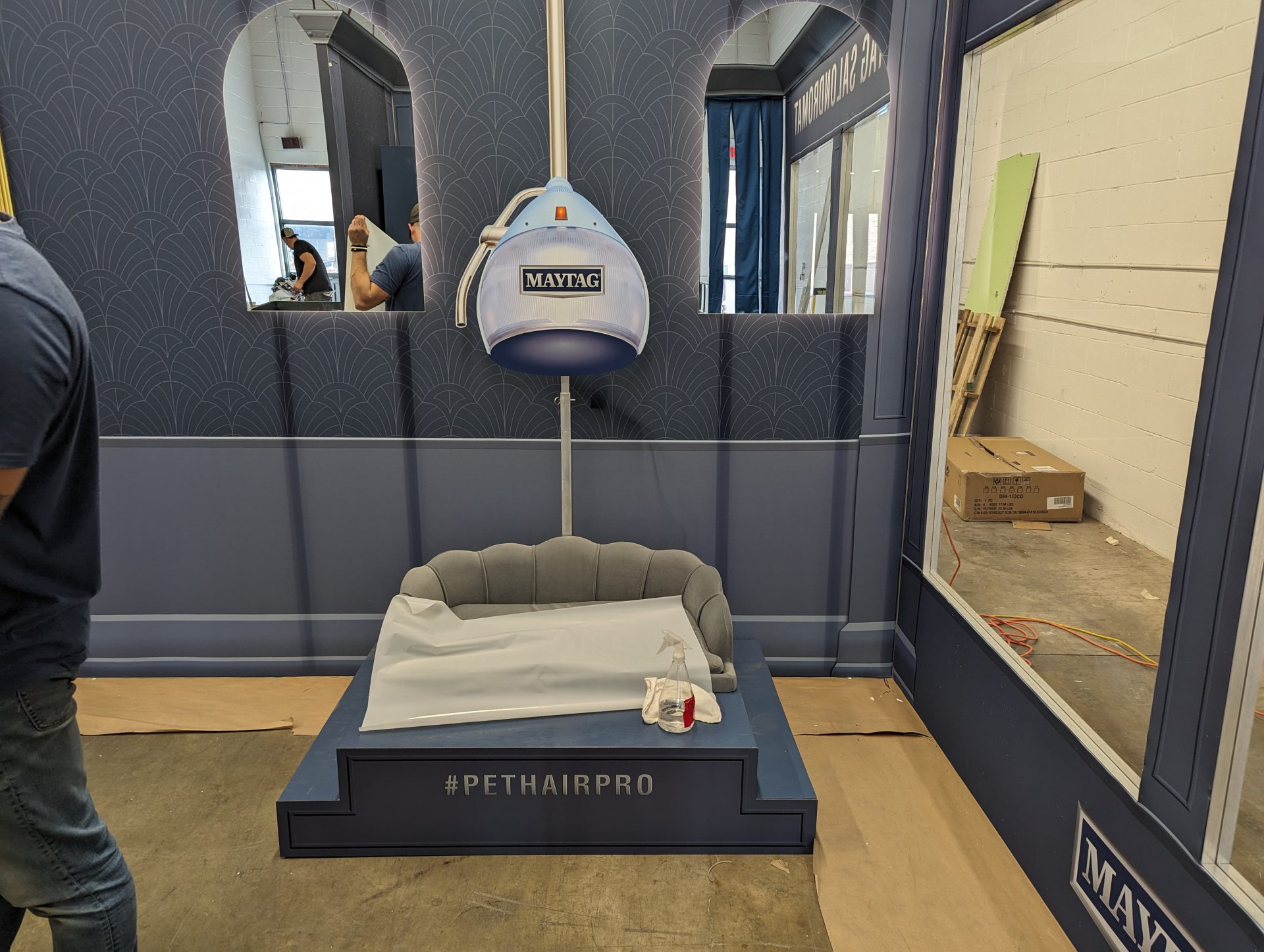
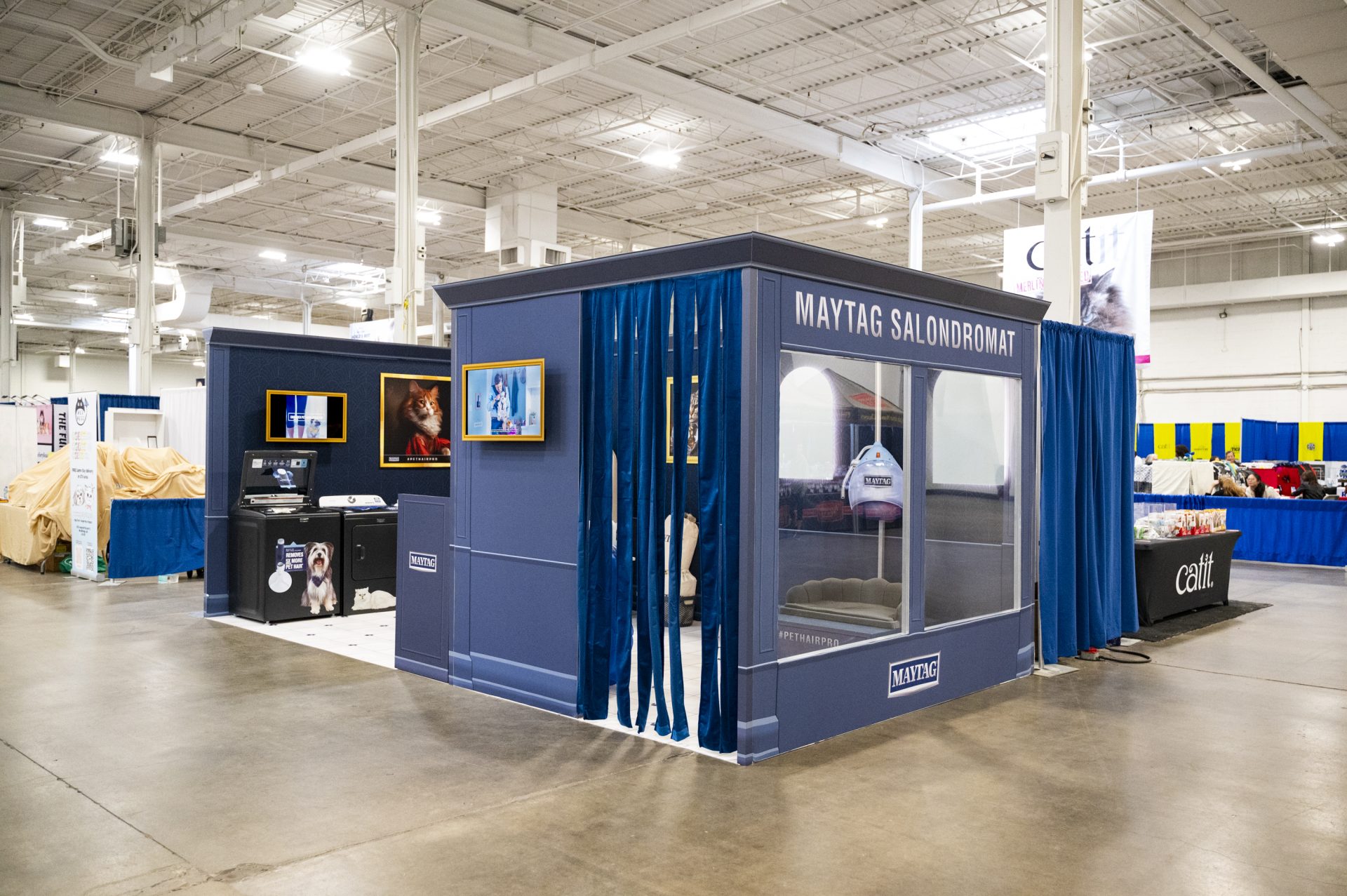
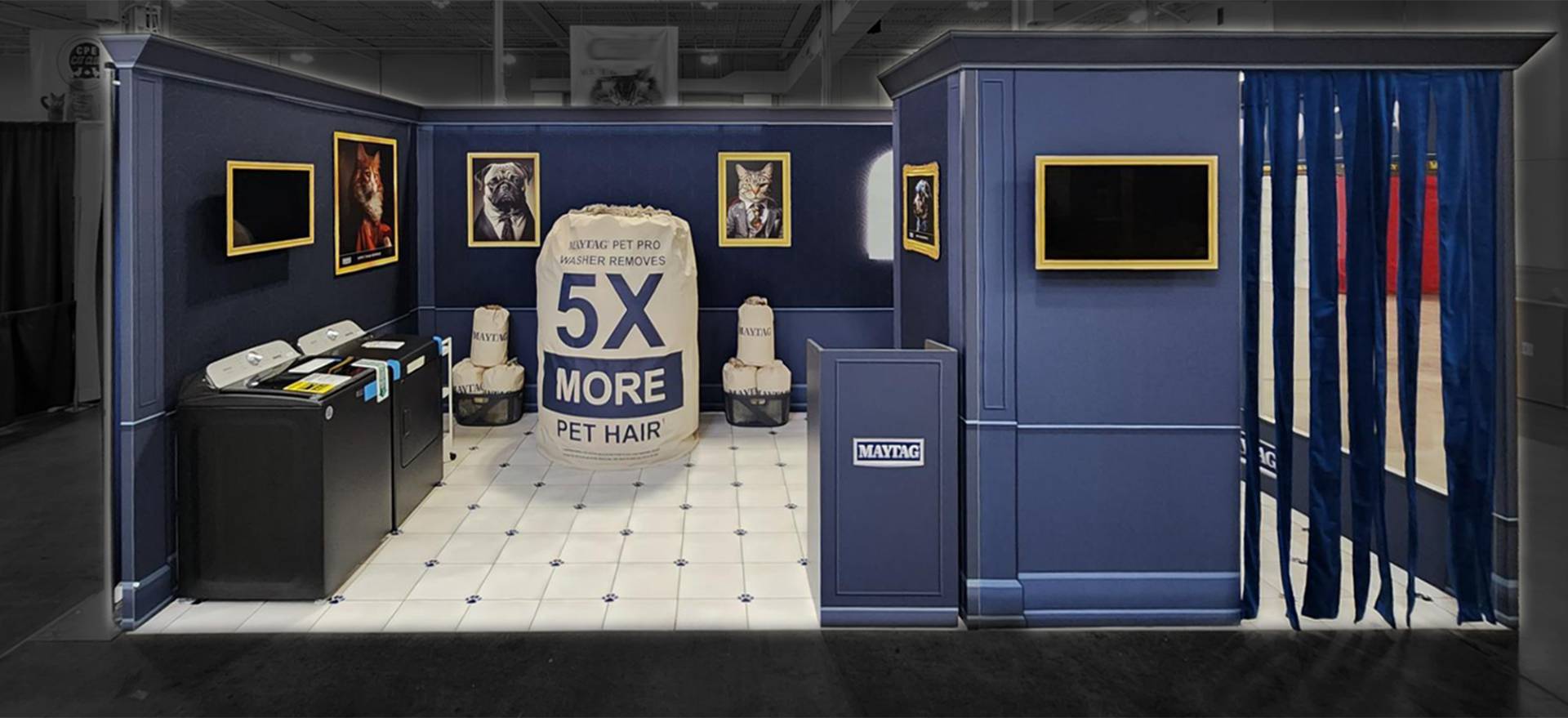
prspktvMEDIA came to shōmi! with a clear creative concept: a “Salondromat,” a tongue-in-cheek pet salon environment with crown molding, wainscoting, framed pet portraits, and a salon-style hairdryer photo op. The challenge wasn’t the concept. It was the reality of a 10×20 booth, a fixed budget, and a second-city deployment that ruled out anything heavy, fragile, or one-time-use.
Every element had to do three jobs at once: look premium on the show floor, ship in a manageable footprint, and set up fast.
Faking the architecture
The walls did the heavy lifting on the “luxury salon” read, but real wainscoting and crown molding were off the table. They blow trade show budgets, break in transit, and add days to install.
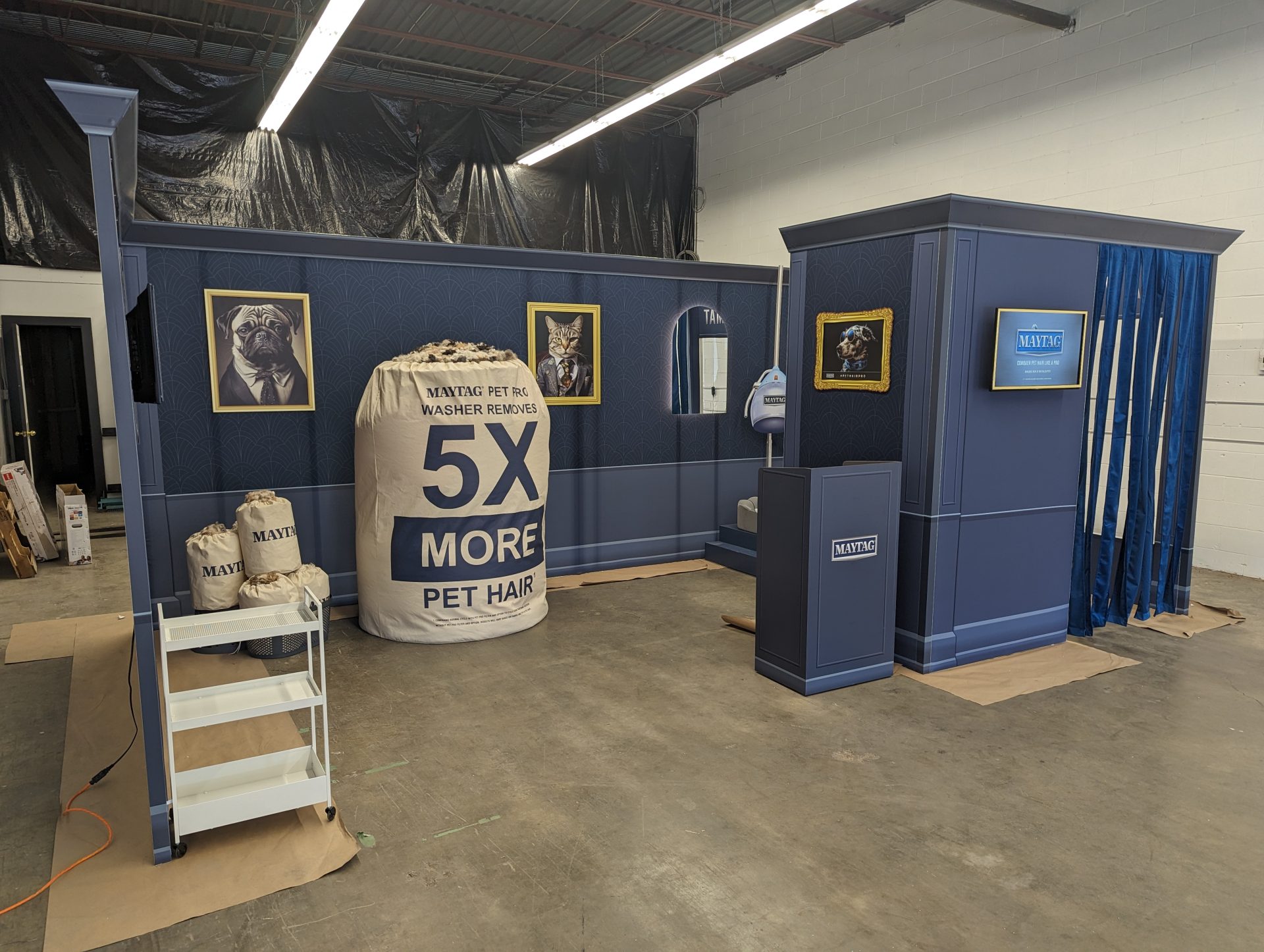
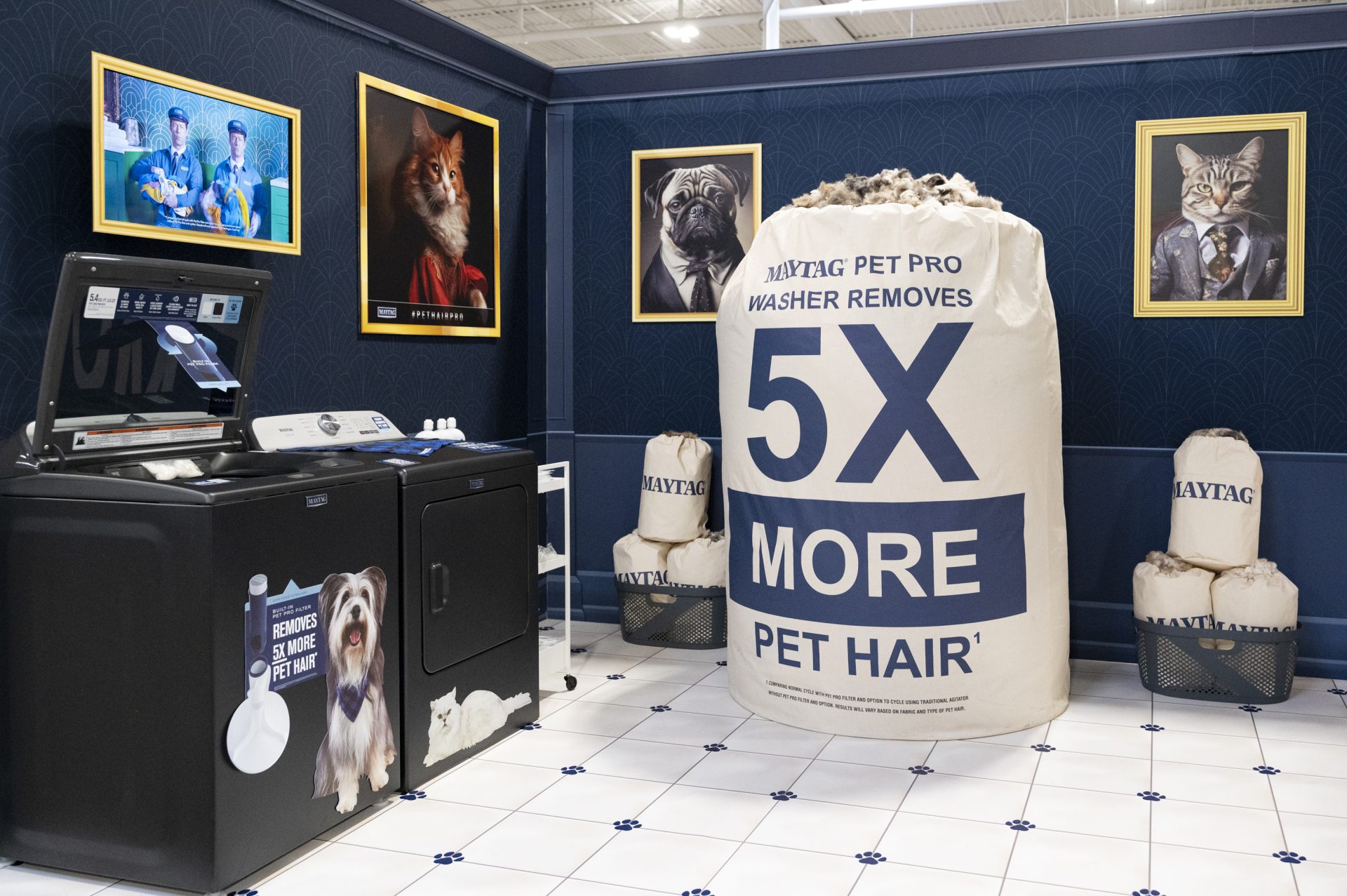
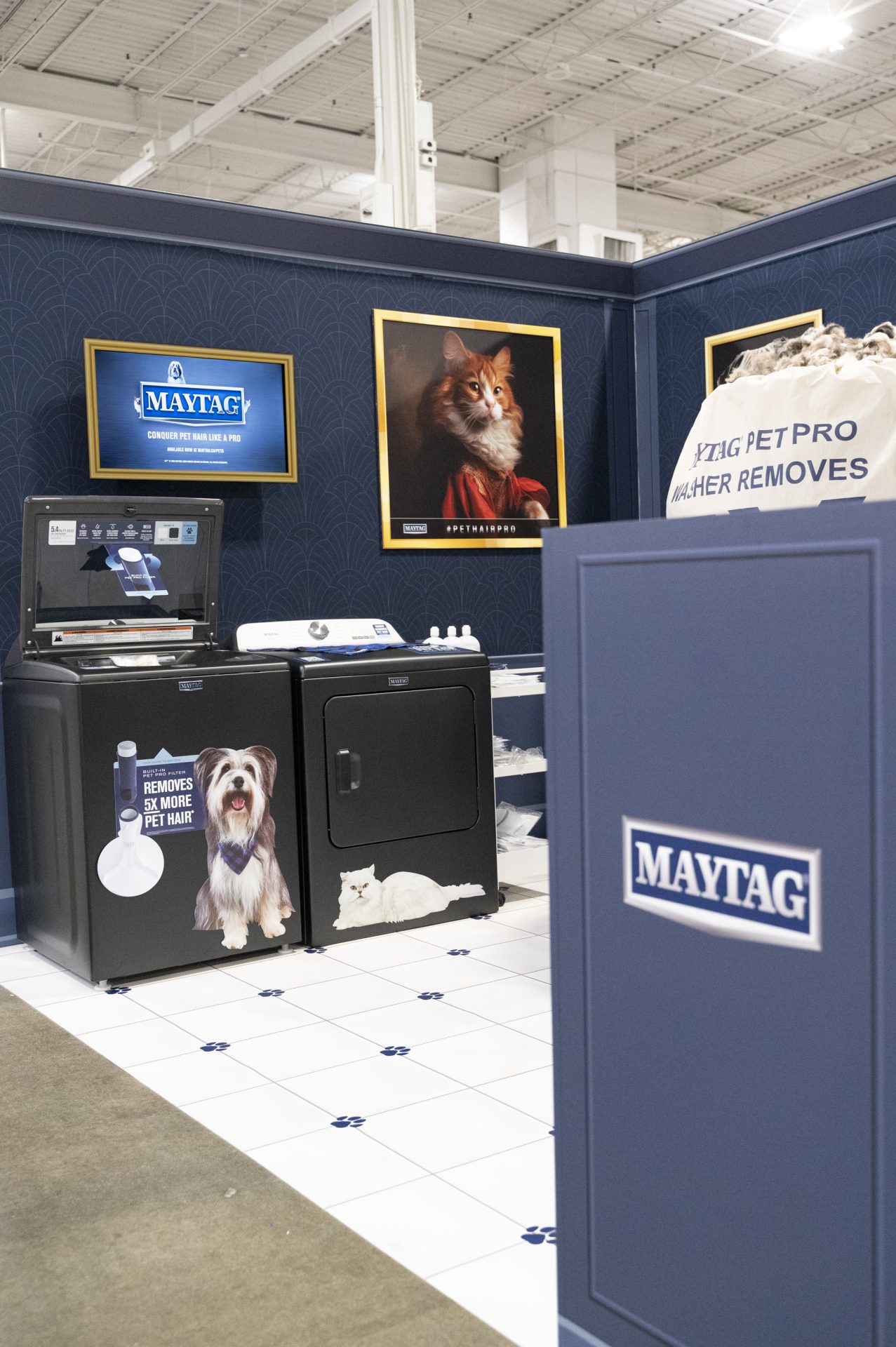
The solution was a two-layer approach. SEG stretch fabric panels were printed to simulate wainscoting and upscale paneling, giving the walls the depth and tone of a renovated salon at a fraction of the weight. The faux crown molding was achieved with printed pressure-sensitive vinyl applied to aluminum composite, delivering the architectural detail at a fraction of the cost. From the aisle, the walls read as a real space. From the crate, they read as flat panels.
The framed pet portraits used the same logic. Rather than building or sourcing actual frames, frame graphics were printed directly onto flat stock alongside the portrait images, giving the gallery-wall effect without the weight or breakage risk.
Solving the floor in a tube
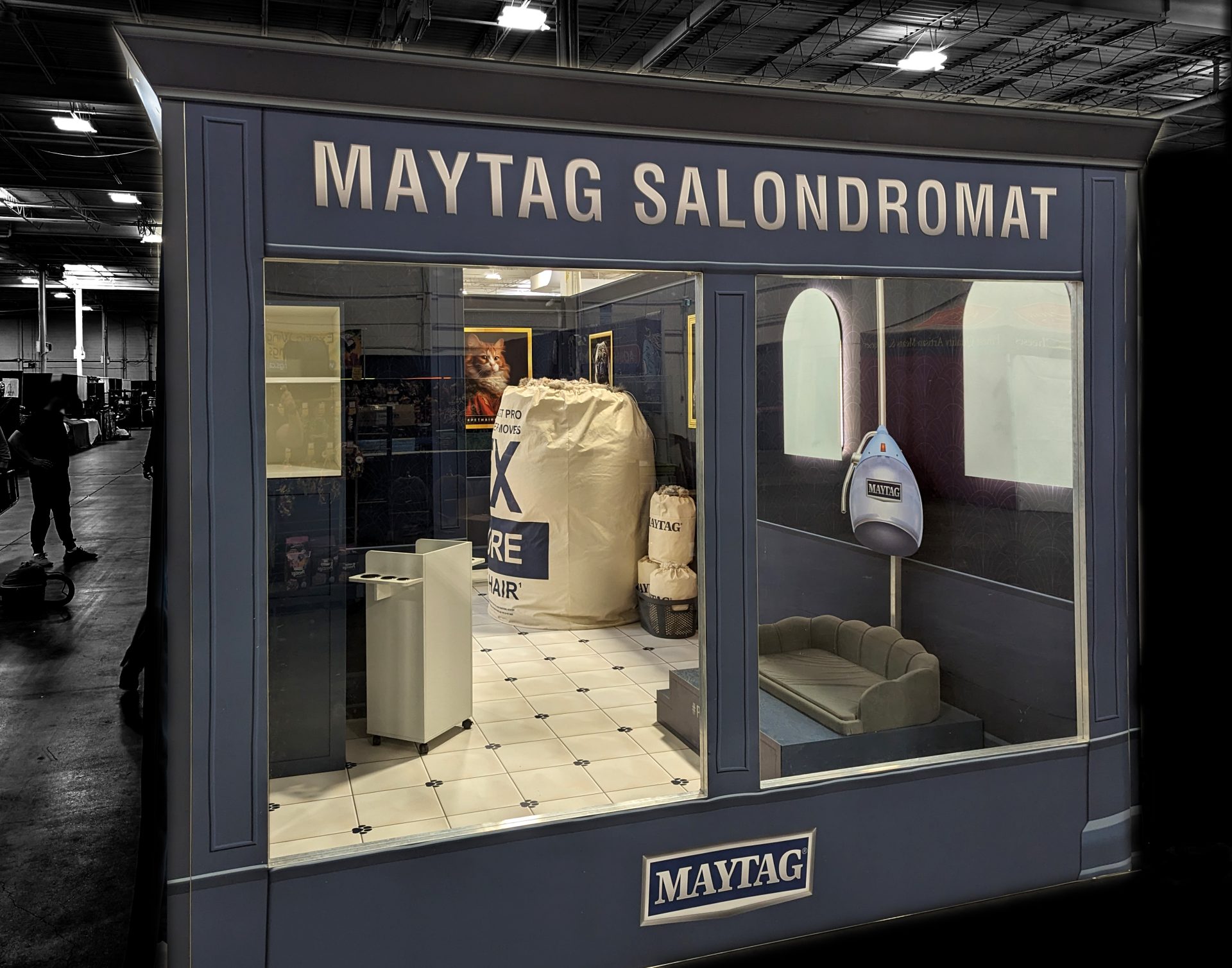
A tile floor with embedded paw prints would have looked the part and added two days to install, plus a hard-to-ship footprint. The shōmi! graphic designer created a custom tile-and-paw-print pattern in-house and printed it on roll-up flooring. The visual story was identical to laid tile. Setup took minutes. The whole floor shipped in a tube.
The hair bags
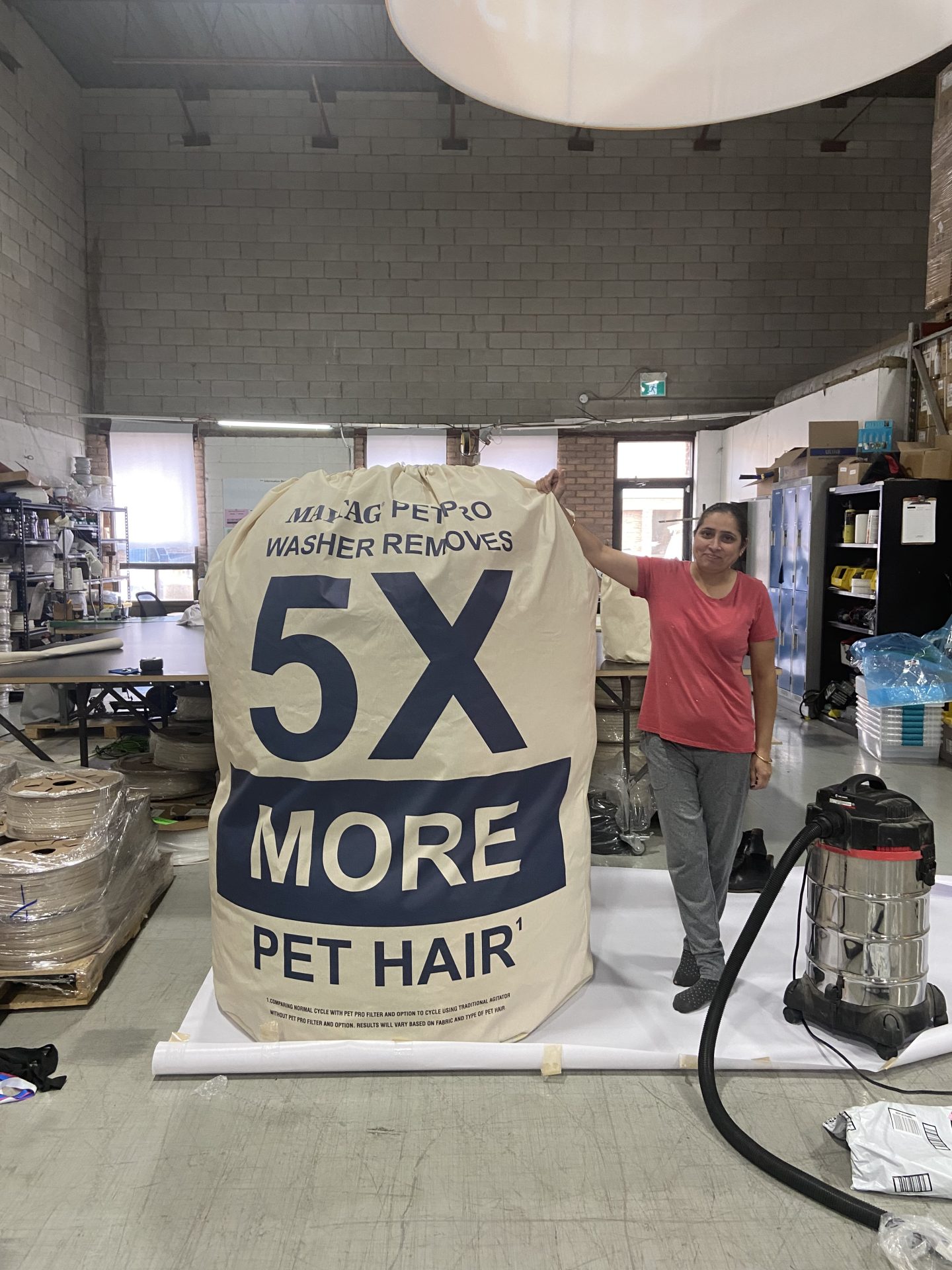
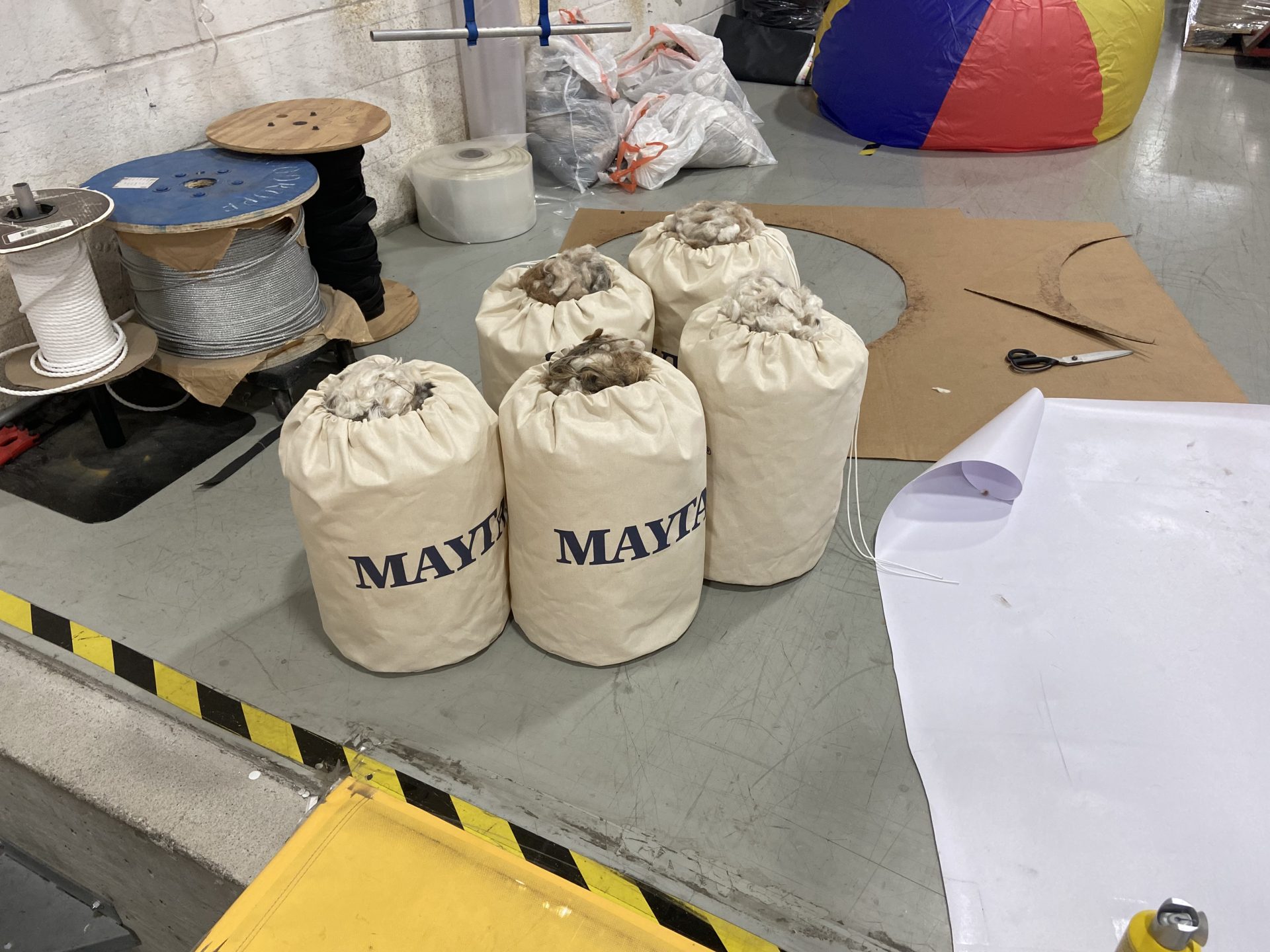
The hero prop of the booth was a pile of oversized pet hair bags sitting beside the washer and dryer, making Maytag’s claim, removing five times more pet hair than other models, impossible to miss. Filling them with real pet hair alone would have made them heavy and slow to ship between cities. Filling them with fake material would have lost the realism the concept depended on.
The shōmi! solution mixed real pet hair with bubble wrap for volume, giving the bags the right read at conversational distance without the weight. The largest hero bag was built around an inflatable core, allowing it to ship flat and inflate to full visual scale on site.
The hairdryer photo op
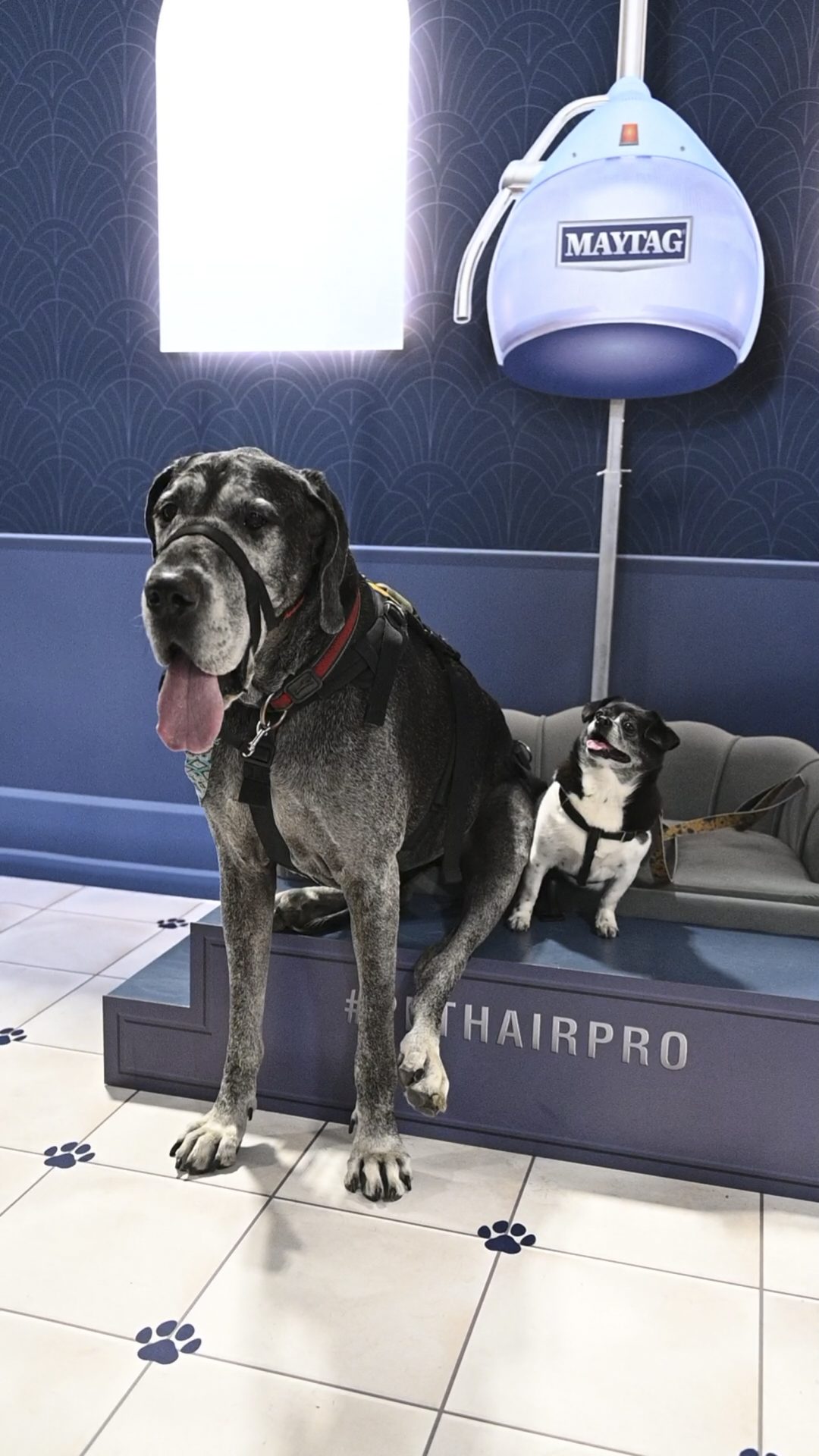
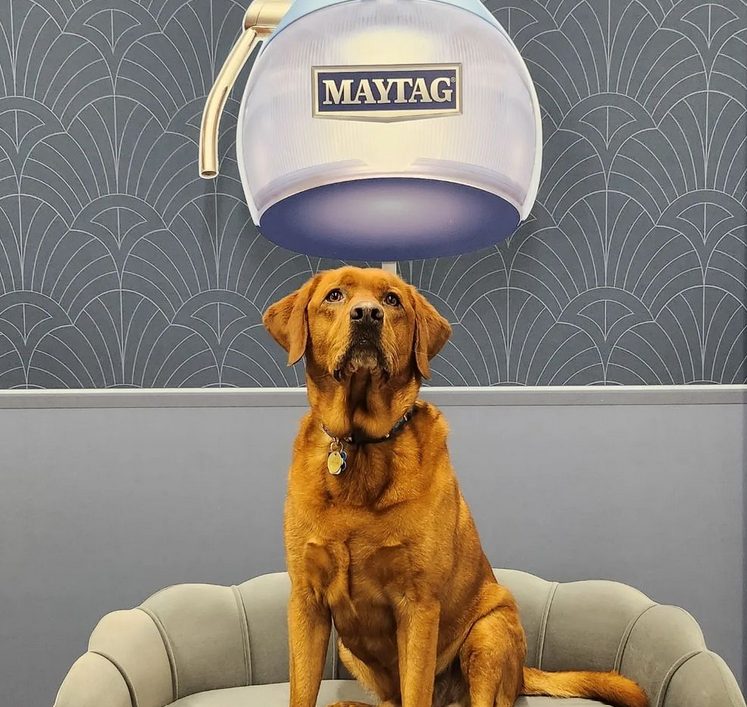
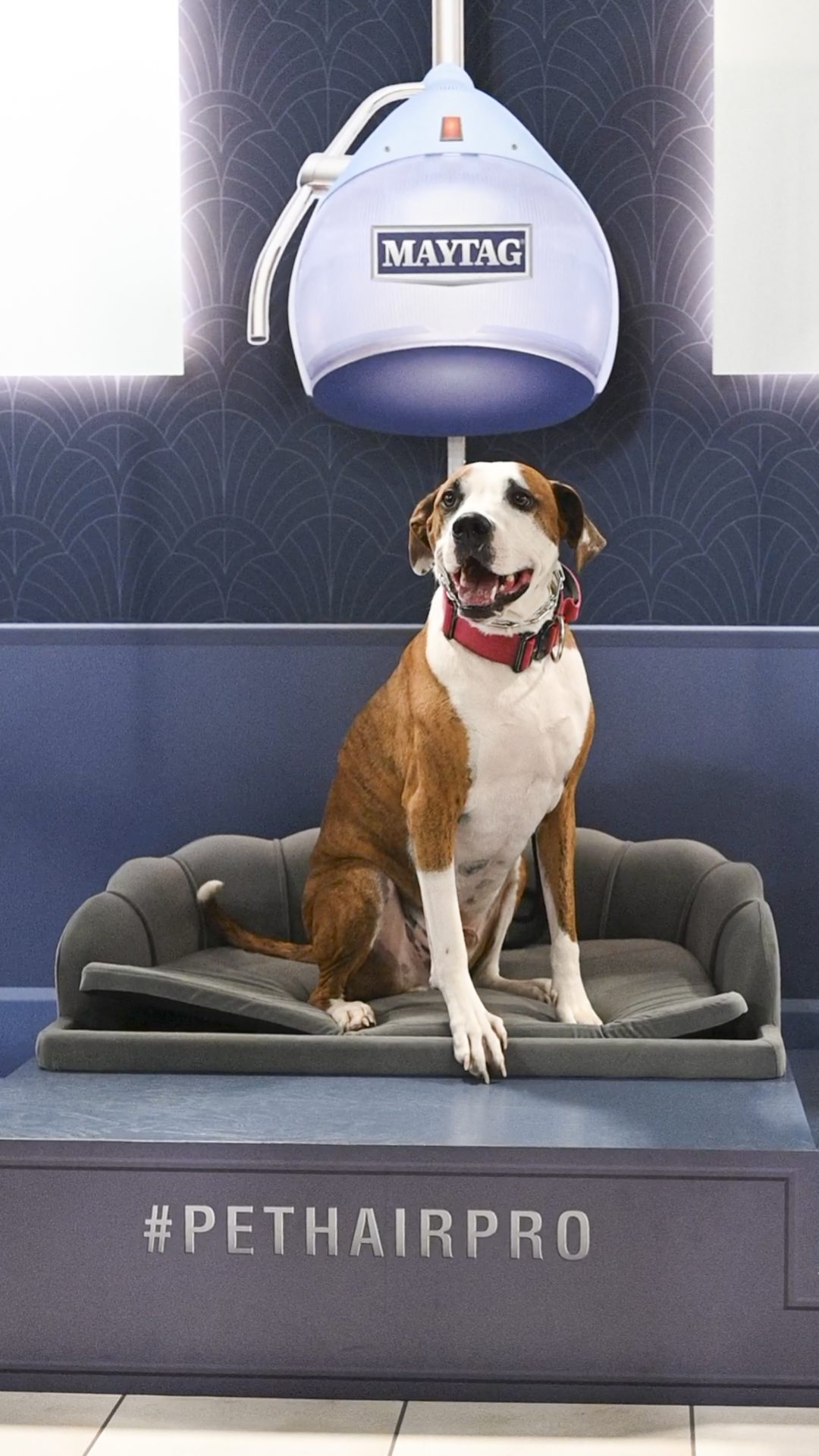
The salon-style hairdryer was the booth’s signature interactive moment, designed to draw attendees and their pets into a shareable photo. Because the booth had to work for a chihuahua and a labradoodle in the same hour, the hairdryer needed a height-adjustable frame that booth staff could operate quickly between takes.
The result was a working photo op rather than a decorative prop, which is how it generated the line, the social tags, and the conversations Maytag came to the show to start.
What this kind of build proves
Builds like this one come down to judgment about where to spend the money and where to fake it convincingly. Real architecture and tile would have eaten the budget and blown the timeline. Pure-fur hair bags would have been too heavy to ship and too bulky to move between cities. The decisions that made the Salondromat work weren’t about doing less. They were about knowing which details people actually remember.
For Maytag and prspktvMEDIA, that meant a booth that delivered a premium brand experience, travelled to a second city without rebuilding, and gave the Canadian Pet Expo a memorable corner of the floor.
Planning a similar build?
If you’re working on a trade show booth, retail install, or experiential build that needs to land as premium without the premium budget, we’re happy to talk through what’s possible and where the smart spends usually go.
Frequently asked questions
How can a trade show booth feel premium without a premium budget?
By choosing carefully where to spend and where to simulate. Real architectural detail (crown molding, laid tile, hardwood, lacquered finishes) usually breaks the budget and the timeline. The Maytag Salondromat booth achieved a high-end pet salon aesthetic by simulating the architecture: printed vinyl on aluminum composite for crown molding, SEG fabric for wainscoting, roll-up printed flooring for tile. The budget went to the moments people actually remembered, including the oversized hair bags and the height-adjustable salon hairdryer photo op. The judgment call is which details earn their cost.
Can a custom trade show booth ship to multiple cities without rebuilding?
Yes, if it’s engineered for travel from the start. The Maytag Salondromat booth was built for the Canadian Pet Expo and then a second city, which meant every component had to ship in a manageable footprint, set up fast, and survive a second handling without being remade. Achieving that meant flat-packing the walls as SEG fabric panels, rolling up the printed floor into a tube, and engineering the hero hair bag around an inflatable core that shipped flat and inflated on site.
What is SEG fabric and why is it used in trade show booths?
SEG fabric is silicone edge graphic fabric: a printed stretch fabric panel with a thin silicone bead sewn around its edge that locks into a recessed channel in an aluminum frame. It’s used in trade show booths because the graphics swap out easily, the panels ship flat, and the finished surface is tight, seamless, and dust-free. In the Maytag Salondromat booth, SEG fabric was printed to simulate wainscoting and upscale wall paneling, delivering the depth of a renovated room at a fraction of the weight.
How do you fake crown molding in a trade show booth?
With printed pressure-sensitive vinyl applied to aluminum composite. In the Maytag Salondromat build, this approach delivered the architectural detail of crown molding without the cost, weight, or fragility of the real thing. The vinyl carries the printed molding profile and shadow, and the rigid aluminum composite substrate gives the wall a clean, finished read from the aisle. It ships flat and survives transit.
Can printed flooring replace real tile in a trade show booth?
Yes, and for trade show and modular deployments it usually should. Laid tile is heavy, takes hours to install, and is hard to ship between cities. Roll-up printed flooring delivers the same visual story (in the Maytag Salondromat case, a custom tile and paw print pattern designed in-house), rolls into a tube for transport, and sets up in minutes. For shows with tight install windows or multi-city tours, printed flooring almost always wins on cost, install time, and reusability.
How do you build a 3D trade show prop that ships flat?
Engineer it around an inflatable core or collapsible armature, and use lightweight fill materials to add volume. The Maytag Salondromat’s hero pet hair bag had to read as a full sack of hair from across the aisle while shipping in a manageable footprint. The shōmi! solution was an inflatable membrane inside the bag plus a fill of real pet hair mixed with bubble wrap. The bubble wrap added volume without adding weight, and the inflatable core let the prop ship flat and reach full visual scale on site.
We’ve faked crown molding, shipped inflatable hair bags, and built a hairdryer for every size of dog. Whatever’s got you stuck, we’ve probably faked something weirder. Tell us about it.