
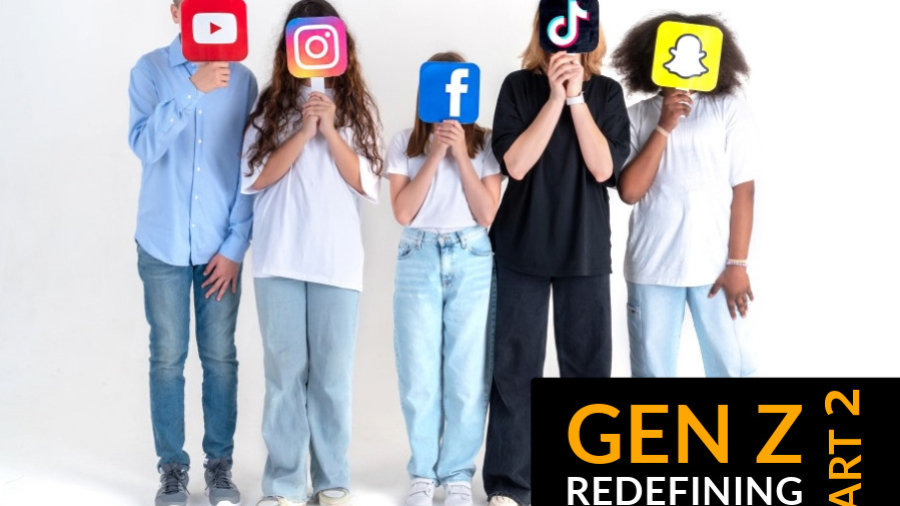
Gen Z, Redefining the Future of Retail Part 2: Seven Brands That Got It Right
Gen Z doesn’t shop the way previous generations did, and they don’t respond to the same marketing playbook. They’re more diverse than any generation before them, more attuned to authenticity, and quicker to call out a brand that’s faking it. They expect the brands they support to mean what they say, which is a higher bar than the marketing industry has historically had to clear.
The brands that have figured this out aren’t following a checklist. They’re operating on a few clear principles. Here are seven that have done it well, and what each of them gets right.
1. Patagonia: putting the money where the mission is
Patagonia has built its brand around environmental responsibility, and unlike most companies that talk about sustainability, it backs the claim with action: recycled materials, fair labour practices, a percentage of sales donated to environmental causes, and a willingness to tell customers not to buy things they don’t need. That last one alone is enough to disqualify roughly 95% of brands from copying the strategy.
The lesson isn’t “be sustainable.” It’s that Gen Z can tell the difference between a sustainability statement and an actual commitment, and they reward the second one.
2. Nike: standing for something, knowing the risk
Nike’s “Dream Crazy” campaign with Colin Kaepernick was a calculated bet that taking a clear position on social justice would resonate more than it would alienate. The campaign generated significant backlash from older demographics and significant loyalty from younger ones. Nike chose its audience, which is a different exercise than trying to keep everyone happy and ending up with no one’s attention.
The lesson: Gen Z respects brands with a point of view more than brands trying to be liked by everyone. Trying to please all demographics tends to please none of them.
3. Billie: rewriting the category, not just the messaging
Billie, a women’s razor brand, ran ads showing real body hair on women: a small choice that quietly contradicted decades of category convention. The category had been showing women shaving already-smooth skin for so long that nobody noticed how strange it was. Billie did, and made a brand out of pointing it out.
The brand was acquired by Procter & Gamble in 2021. The lesson: Gen Z notices when a brand is willing to make its competitors look behind the times. Body positivity isn’t a marketing layer here; it’s the product positioning.
4. Fenty Beauty: setting the standard the category has to catch up to
When Fenty Beauty launched in 2017 with 40 foundation shades, it didn’t just expand its own product line. It redefined what an acceptable shade range looked like for the entire beauty industry. Competitors that had been shipping ranges of 20 or 25 shades suddenly looked behind the curve, and most of them spent the following years quietly catching up and hoping nobody asked what took them so long.
The lesson: diversity isn’t a campaign, it’s a product decision. Gen Z notices the difference between a brand that adds an inclusive ad to an exclusive product line and a brand that builds inclusion into the product itself.
5. Spotify: personalisation as the product
Spotify’s Wrapped campaign turns user data into a shareable annual moment, which is to say it convinced millions of people to voluntarily post their listening habits to social media every December. The personalisation isn’t a feature on top of the product. It’s a core part of why people use Spotify in the first place.
The lesson: Gen Z expects experiences that adapt to them, not the other way around. Personalisation done well doesn’t feel like targeting. It feels like the product knows you, in a flattering way, and not in the way that prompts you to check your phone permissions.
6. Liquid Death: taking the brand seriously by refusing to take itself seriously
A canned water company with a heavy metal aesthetic and the tagline “Murder Your Thirst” shouldn’t work. It works. Liquid Death turned the most boring product category in retail into a brand people actually want on their fridge, and they did it by committing harder to the bit than anyone thought was reasonable.
The aluminum cans are also infinitely recyclable, which makes the sustainability story real, but the sustainability story isn’t the lead. The lead is that the brand is fun, and the sustainability is what’s quietly true underneath. The lesson: Gen Z responds to brands that have a sense of humour about themselves, and they’re suspicious of brands that don’t. Being earnest about a mission and irreverent about everything else turns out to be a stronger position than being earnest about absolutely everything, which is what most brand decks recommend.
7. Lush: making the physical store the brand
Walk into a Lush store and the experience is immediately different from every other beauty retailer: products sold without packaging, sales associates demoing soaps on your hands at a sink in the middle of the store, signage that reads more like a manifesto than a price tag. The brand’s anti-corporate, anti-packaging, anti-conventional-retail positioning isn’t a marketing message you read about online. It’s the store. You can smell it from across the mall, which is also part of the strategy.
The lesson: physical retail is one of the strongest brand expressions available, and most brands underuse it. For Gen Z, who get most of their brand impressions through screens, a physical space that genuinely commits to a point of view stands out by default.
What these brands have in common
Seven different categories, seven different stories, but the underlying principles repeat:
- Authenticity beats polish. Gen Z can spot a focus-grouped statement at fifty paces. Brands that sound like real organisations with real positions outperform brands that sound like brand decks.
- Diversity and inclusion are baseline, not differentiators. Showing up with products and imagery that reflect a diverse audience is the floor, not the ceiling. Brands that treat it as a campaign rather than a product-level commitment tend to get caught.
- Social media is the conversation, not the megaphone. Instagram, TikTok, YouTube, and Snapchat reward brands that engage like community members, not advertisers. User-generated content and creator collaboration outperform polished brand content most of the time.
- Storytelling beats specs. Gen Z is drawn to brands with a narrative they want to be part of, whether that’s sustainability, social justice, self-expression, or craft. Transactional messaging doesn’t build loyalty here.
- Sustainability and social responsibility have to be real. Surface-level “green” claims get flagged fast. Genuine commitments, communicated honestly (including the parts that aren’t perfect yet), build trust.
- Personalisation is expected, not impressive. Gen Z grew up with algorithms that knew their preferences. Generic shopping experiences feel dated by comparison.
- A sense of humour is a feature. Brands that take themselves too seriously read as out of touch. Brands that are willing to be funny, weird, or self-aware tend to feel more human, and humans are what Gen Z wants to buy from.
- Physical space is part of the brand, not separate from it. Stores, pop-ups, and activations are some of the most memorable brand impressions available, and they’re often the most underused.
How this plays out in physical retail
Most of these examples live in digital marketing, product design, or brand campaigns. But the same principles translate directly to physical retail environments. A pop-up that tells a clear story, a fixture program that uses materials a Gen Z shopper would actually want to ask about, a trade show booth that doesn’t look like every other booth in the row: all of these are physical expressions of the same ideas.
Lush figured this out. So did Liquid Death, in their own way, every time they show up at a festival or grocery aisle and refuse to look like the rest of the shelf. The brands that build retail environments worth posting about have figured it out too.
At shōmi!, we work with brands and agencies thinking about how their physical presence reflects what they actually stand for. If you’re planning a retail rollout, pop-up, or activation aimed at a younger audience and want a second set of eyes on the build, we’re happy to take a look.

