
The Evolution of Retail Displays:
From Hand-Painted Boards to Digital Visual Displays
Retail signage didn’t start with digital screens. It started with painted symbols on Roman walls, ivy bushes nailed above tavern doors, and elaborate hand-painted boards that doubled as small works of art. The technology has changed dramatically over the last two thousand years. The job hasn’t: get people to stop, look, and walk in.
Here’s how retail displays got from there to here, and where they’re heading next.
Pre-19th century: hand-painted boards and the original visual language
The earliest retail signage goes back to ancient civilisations. Egyptians, Greeks, and Romans used painted symbols and terracotta plaques to advertise shops and services, and the Romans in particular were prolific about it. Taverns hung ivy bushes above their doors to signal wine. Bakeries used loaves. The whole vocabulary of “we sell the thing this picture shows” was already in place.
By the Middle Ages, hand-painted signs had become the standard in European trade districts. Most people couldn’t read, so the signs relied on imagery, and innkeepers in particular got creative: signs were elaborate, often humorous, and frequently the first impression a traveller had of a business. The craft of sign-painting required real skill, and good signs were considered a serious commercial asset.
Worth noting: the basic logic hasn’t changed. “Symbol that communicates what we sell, visible from the street, designed to interrupt the passing eye” is the same brief today. The materials are just different.
19th century: the printing press and the rise of consistency
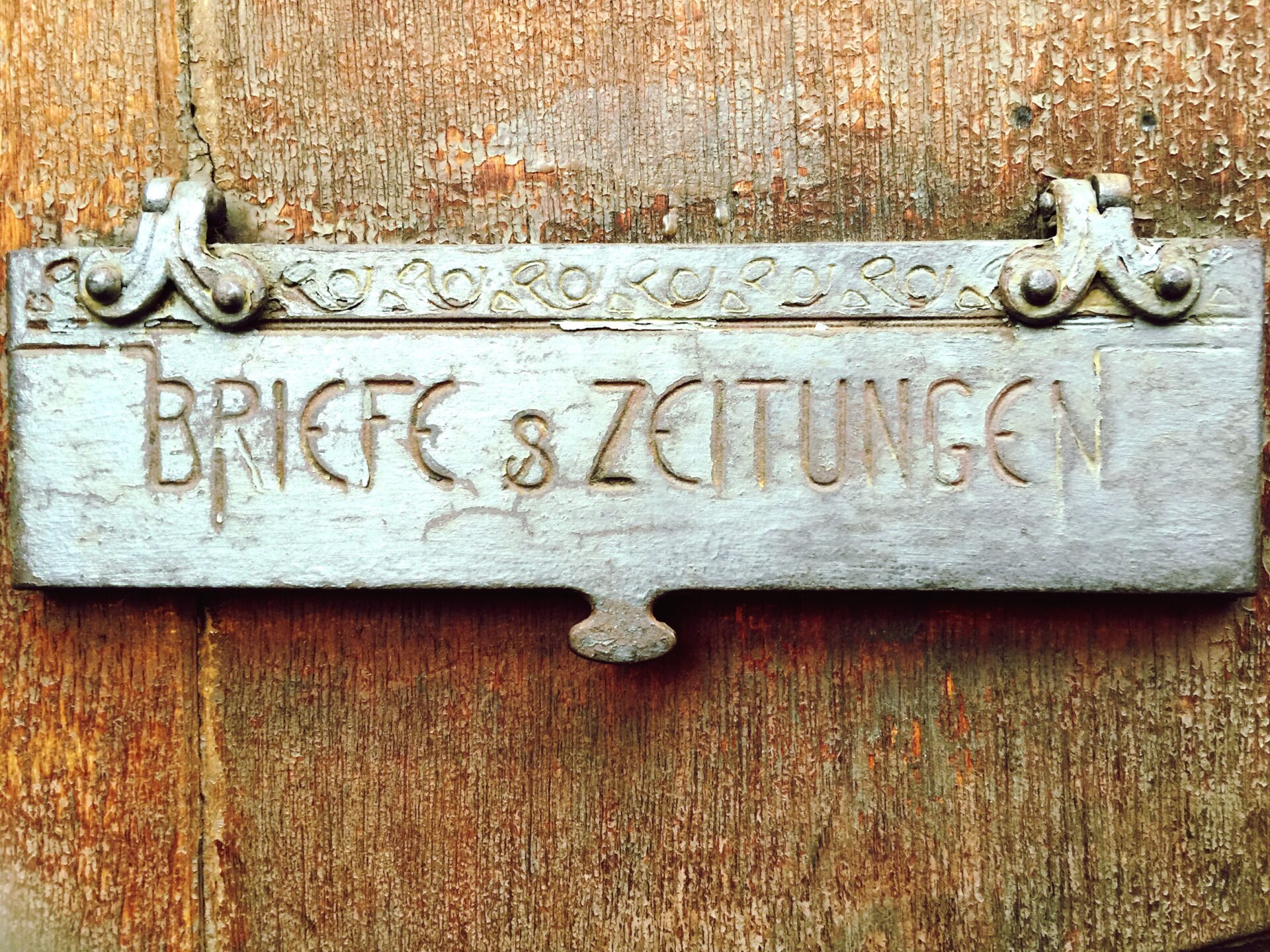
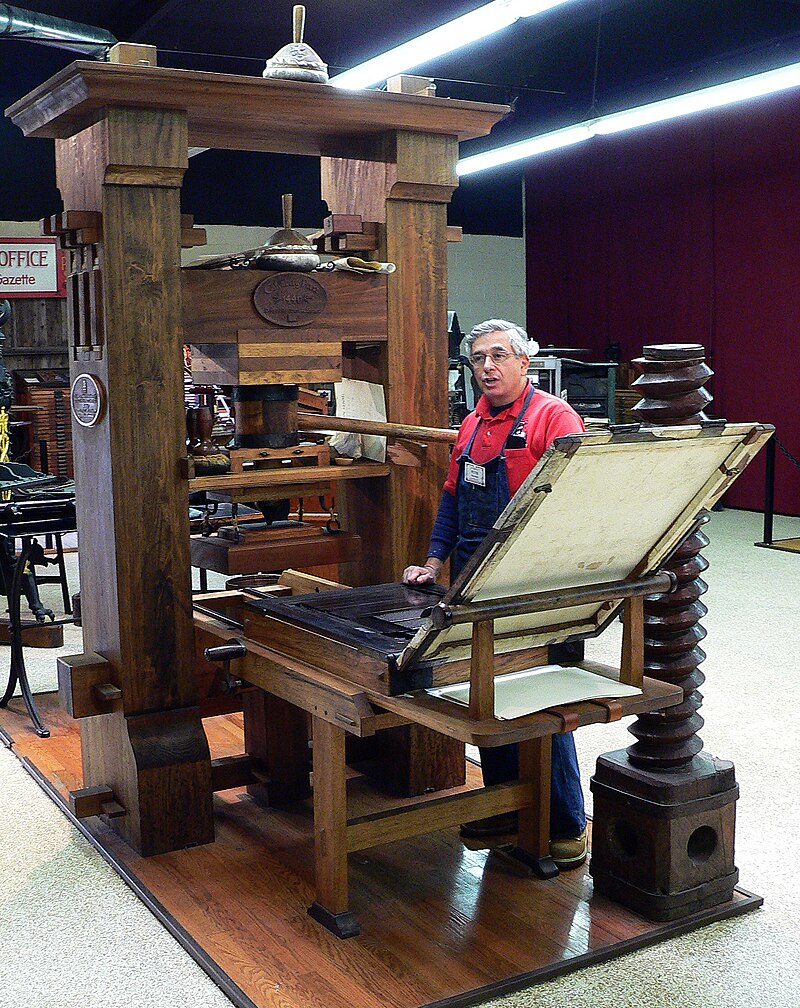
Printing technology transformed retail signage by making it reproducible. The first known printed advertising poster came earlier than most people guess: William Caxton printed an advertisement for the Ordinale ad Usum Sarum, a priest’s handbook, in 1477. But mass adoption took another few centuries, and the real shift came in the 19th century when lithography arrived and made colour printing practical at scale.
For the first time, businesses could produce signs that looked identical across multiple locations. Brand consistency, which today is treated as a baseline expectation, was a new and powerful idea. Small businesses could now afford professional-looking signs that competed visually with bigger players, and storefronts started to look more designed and less improvised.
1920s to 1960s: the neon era
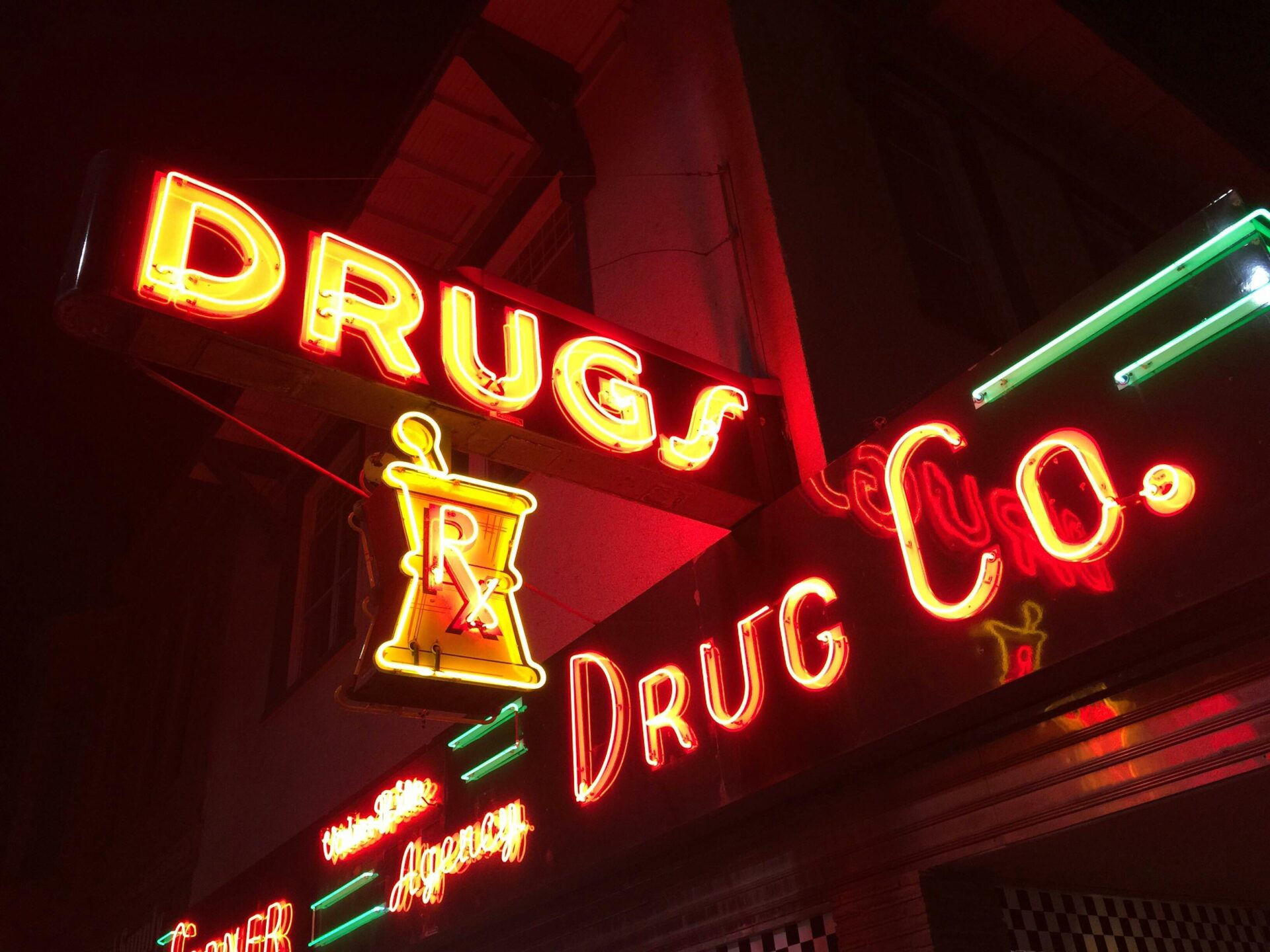
If the printing press standardised signage, neon made it impossible to ignore. The first neon sign in the United States was installed in 1923 in Los Angeles, advertising a Packard dealership. It cost $24,000, the equivalent of several hundred thousand dollars today, which is a remarkable amount of money to spend on a sign and also entirely explains why the technology spread the way it did.
Through the middle decades of the 20th century, neon defined the visual identity of urban retail. Bent glass tubes filled with different gases produced colours and shapes that nothing else could match, and entire districts (Times Square, the Las Vegas Strip, downtown Tokyo) became globally recognisable largely because of their neon. The signs weren’t just advertising. They became the architecture.
2000s to present: digital displays and interactive signage
The digital revolution changed two things about retail signage at the same time: what the sign could show, and how often it could change. LED displays, digital billboards, and interactive kiosks meant a single piece of hardware could run an unlimited number of campaigns, update in real time, and respond to the person standing in front of it.
That flexibility opened up possibilities that earlier formats couldn’t approach: dynamic pricing displays, time-of-day-specific promotions, interactive product browsers, personalised content driven by customer data. The trade-off is that digital signage requires ongoing management in a way a painted sign never did. A neon sign from 1955 still works if you replace the gas tubes. A digital display from 2015 may already be running on hardware nobody supports.


2010s to present: the pop-up era
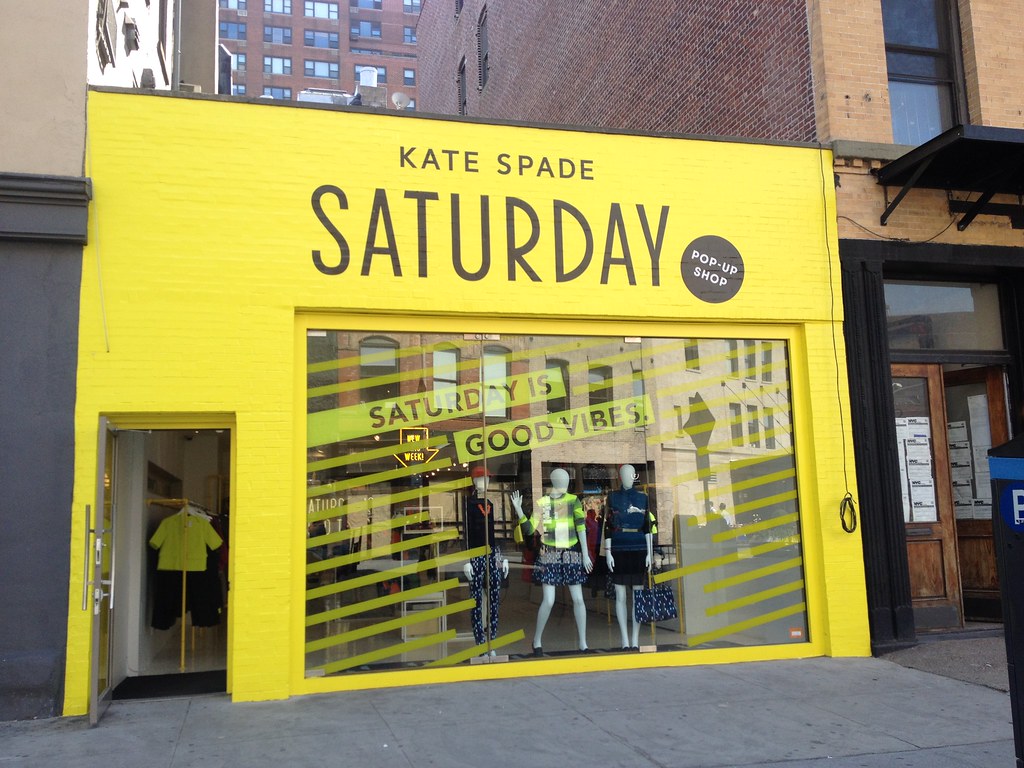
Around the early 2010s, pop-up shops became a serious retail strategy rather than a novelty. Brands realised that temporary retail spaces could create exactly the kind of urgency, exclusivity, and experiential design that permanent stores struggle to maintain. The first pop-up retail concepts go back further (the agency Vacant set up temporary spaces in 1999, and the general idea is older still), but the 2010s is when the format went mainstream.
A well-designed pop-up does several things at once: launches a product, generates social media content, gives existing customers a reason to show up, and reaches new audiences in foot-traffic locations the brand wouldn’t normally operate in. Done badly, it’s a folding table with a vinyl banner. Done well, it’s the kind of installation that ends up on design blogs for months.
Where retail displays are heading
The next decade of retail signage looks like it’s being shaped by three forces.
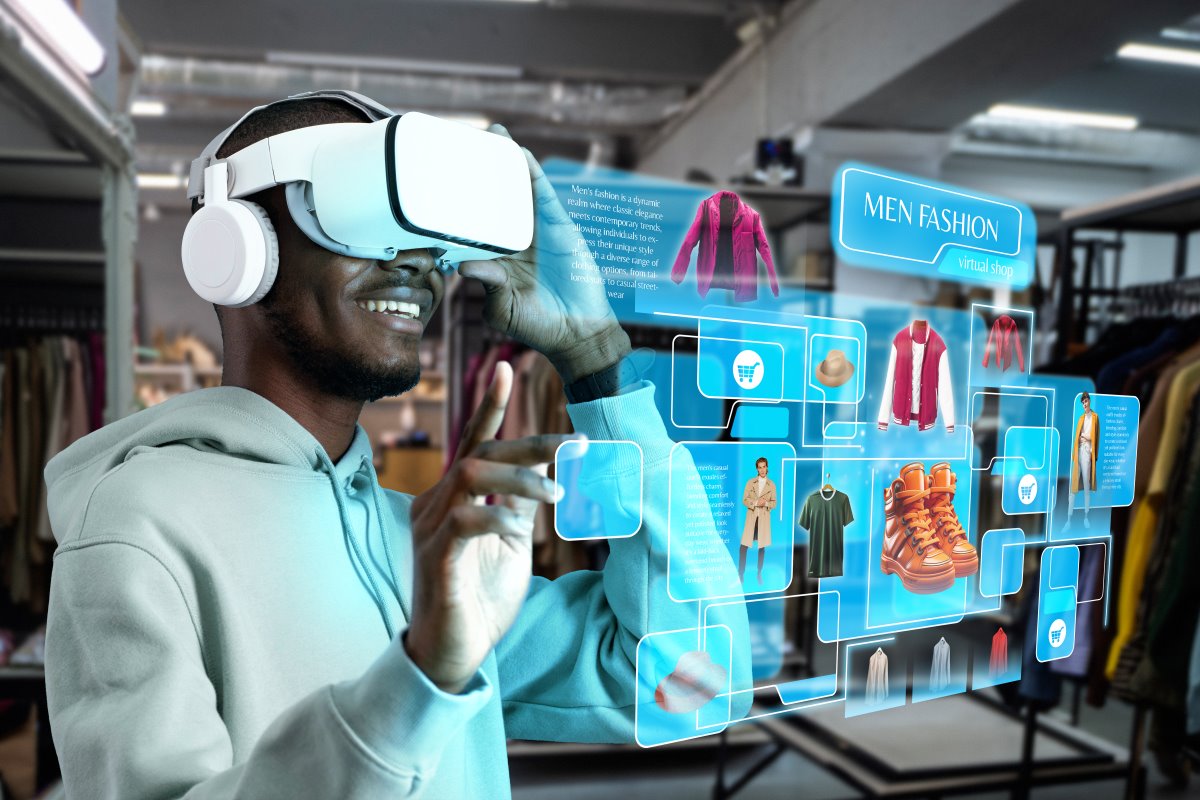
AR, VR, and AI. Augmented and virtual reality let customers visualise products in their own homes before buying, and AI personalises both digital content and physical experiences based on customer behaviour. The use cases that have actually stuck (virtual try-on for cosmetics and eyewear, AR product visualisation for furniture) suggest the technology works best when it solves a specific problem, not when it’s a marketing layer.
Sustainability. Retail signage is moving toward materials that have a future after the campaign ends: biodegradable substrates, recycled aluminum, FSC-certified wood, energy-efficient LED lighting that uses up to 75% less power than older alternatives. Both for environmental reasons and because brands are increasingly being asked to account for what they throw away.
Physical and digital working together. The most interesting current builds aren’t choosing between physical and digital signage. They’re using each for what it does best: physical for atmosphere, scale, and brand expression you can stand inside; digital for responsiveness, personalisation, and content that changes with the audience.
The through-line
Two thousand years of retail signage history boil down to a fairly simple observation: the technology changes, but the question doesn’t. How do you make a passerby stop, look, and decide to come in? Roman shopkeepers, medieval innkeepers, lithographers, neon benders, and digital designers have all been answering the same question with the tools of their century. The next era will look different from this one, the way every era has looked different from the one before it. The question will be the same.